
Paving Company Generated £40,000 Monthly Revenue Lift From Local SEO Map Pack Rankings, Case Study Shows
A Tunbridge Wells paving company increased monthly revenue by £35,000 to £40,000 after achieving top-three Google map pack rankings through a four-month local SEO campaign, according to a case study published August 31 by Lilach Bullock, an AI implementation consultant.
 Marcus Webb··3 min read
Paving Company Generated £40,000 Monthly Revenue Lift From Local SEO Map Pack Rankings, Case Study Shows
A Tunbridge Wells paving company increased monthly revenue by £35,000 to £40,000 after achieving top-three Google map pack rankings through a four-month local SEO campaign, according to a case study published August 31 by Lilach Bullock, an AI implementation consultant. The business went from two to three enquiries per week to nine to ten enquiries, converting at a 35 percent close rate with an average job value of £4,200.
The campaign rebuilt the company's Google Business Profile, increased verified reviews from four to 38, standardized name-address-phone data across online directories, and created separate location pages for five towns instead of a single service-area list. The business ranked on page three for "block paving Tunbridge Wells" and related terms at campaign start, according to Bullock's analysis.
Four-Month Campaign Moved Business From Page Three to Map Pack
The paving company achieved map pack placement for primary service terms within four months by addressing Google Business Profile completeness, review volume, citation consistency, and geographic targeting through dedicated location pages, Bullock reported. The business competed against national directory sites and larger regional competitors before the campaign.
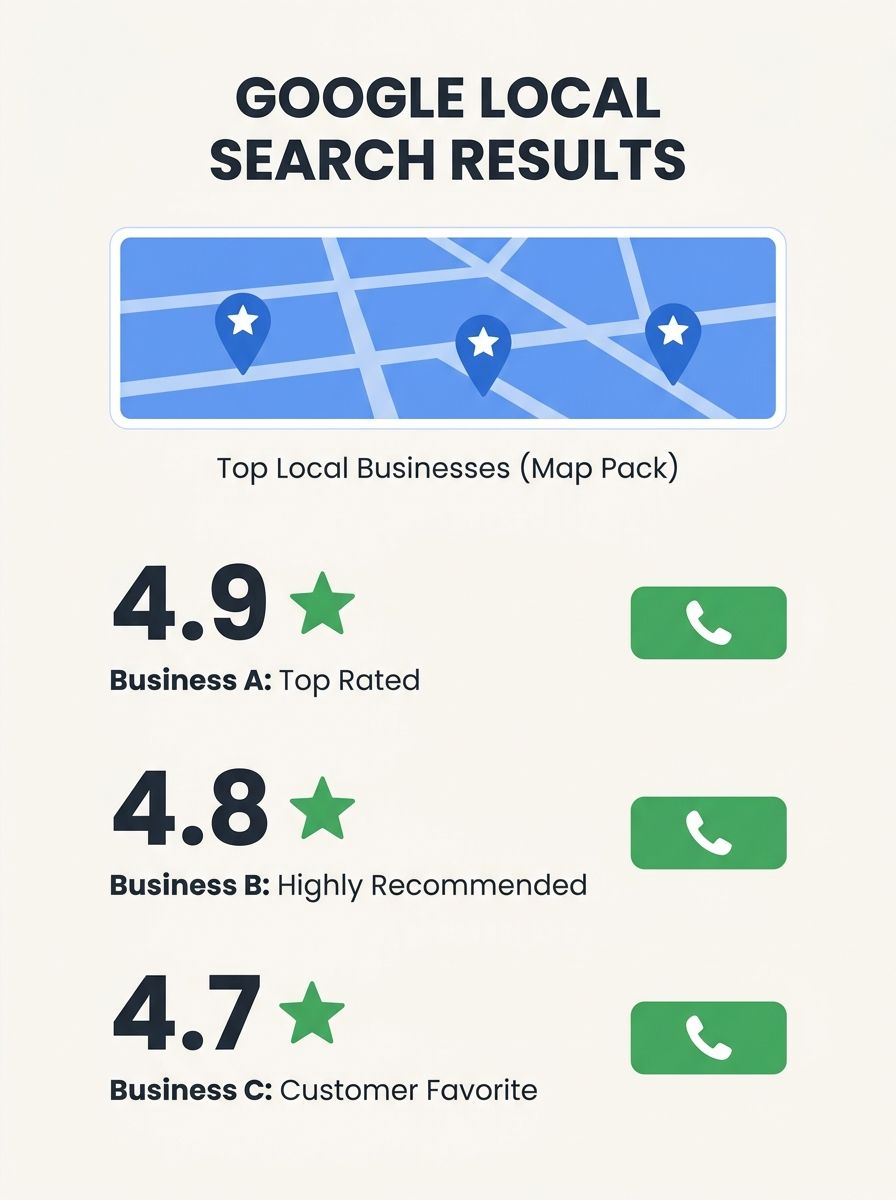
Google prioritizes three businesses in the map pack display at the top of local search results, positioned above traditional organic listings. Map pack placements include photos, star ratings, and click-to-call functionality that drive conversion actions before users scroll to standard web results.
The 35 percent close rate on incoming enquiries remained consistent throughout the campaign period because the owner handled quoting directly, Bullock noted. Monthly job volume increased from approximately three completed projects to 12 to 13 at the campaign's peak seasonal performance.
Review Accumulation and NAP Consistency Drove Ranking Gains
The campaign focused on review velocity rather than one-time review requests, targeting three to five new reviews per month through post-job satisfaction moments with direct text links, according to the case study. Bullock emphasized that rapid review accumulation triggers Google's spam filters, while steady monthly growth signals legitimate customer feedback.
Name-address-phone (NAP) standardization across web properties resolved conflicting business information that created uncertainty in Google's local business entity matching. The paving company used inconsistent business name formats and phone numbers across its website, directory listings, and social profiles before the campaign addressed citation cleanup.
Location page development for five individual towns replaced generic "areas we cover" content with town-specific information, local landmarks, and area case studies. Google interprets dedicated location pages as stronger geographic service signals than multi-town lists on single pages, Bullock's framework shows.
Cost Structure Favors Local SEO Over Paid Advertising Long-Term
Local SEO campaign costs front-load during the four to six-month ranking period, then shift to maintenance work that produces leads at lower per-lead costs than ongoing paid search budgets, Bullock reported. The Tunbridge Wells paving company maintained map pack rankings years after the initial campaign through periodic updates rather than continuous ad spending.
Paid search visibility stops when budget allocation ends, while organic map pack positions compound over time with reduced ongoing investment, according to the analysis. Real estate SEO companies and hospitality SEO agencies apply similar local visibility strategies for property and accommodation searches where map pack placement drives direct booking inquiries.
Map pack placements carry trust signals that paid ad positions lack because users recognize organic rankings with multiple five-star reviews as social proof rather than marketing spend, Bullock noted. This trust factor shortens sales conversations and supports premium pricing in service businesses before prospect contact occurs.
Services Implications
Business owners evaluating local SEO agency proposals should request case studies with specific revenue or lead-volume metrics tied to map pack ranking achievements rather than traffic or impression counts. The Tunbridge Wells case demonstrates that enquiry-to-close conversion rates determine profit outcomes, not search visibility alone—a 35 percent close rate on 40 monthly enquiries generates different profit than the same rate on 12 enquiries.
Marketing managers should audit Google Business Profile completeness across all service categories, hours, photos, and service descriptions before committing agency budgets to link building or content work. The case study shows profile optimization and review accumulation drove ranking gains ahead of off-site tactics, suggesting resource prioritization that front-loads owned-asset improvements.
CMOs comparing ecommerce SEO agencies to local SEO specialists should note the cost structure differences Bullock outlined: local campaigns that achieve map pack placement in competitive markets deliver compounding returns after six months, while paid search budgets produce linear lead costs without accumulation benefits. Service businesses with average transaction values above £3,000 and steady close rates gain measurable profit advantages from sustained map pack positions versus monthly ad budgets that scale with lead volume targets.
Marcus Webb
Digital marketing consultant and agency review specialist. With 12 years in the SEO industry, Marcus has worked with agencies of all sizes and brings an insider perspective to agency evaluations and selection strategies.
Related Articles

Local SEO Guide Identifies Google Business Profile Optimization as Highest-ROI Tactic for Small Businesses in 2026
Success Knocks published a comprehensive local SEO strategy framework on May 21, identifying Google Business Profile optimization as the single highest return-on-investment tactic for small businesses competing in proximity-based search results, according to the analysis posted this morning. The gui

Small Local Businesses Hold Structural Search Advantage Over National Chains Through Proximity Signals
Proximity-based ranking factors give single-location businesses a structural advantage over national chains in local search results, allowing firms with complete Google Business Profile listings and recent reviews to outrank 900-branch competitors in map pack placements, according to an analysis pub

Search Engine Journal Updates Multi-Location SEO Framework for AI-Powered Search Era
Search Engine Journal published a revised multi-location SEO framework on June 9 that repositions Google's local ranking factors as entity-matching mechanisms rather than directory lookups, according to the guide authored by the publication's technical SEO team. The framework addresses how businesse
Explore more topics