
Ahrefs Leads SEO Platform Database Capacity as Adobe-Owned Semrush and Budget-Focused Serpstat Serve Distinct Market Segments
Ahrefs maintains the largest backlink database among leading SEO platforms with 35 trillion live links and 16 years of historical data, according to a comprehensive tool comparison published August 29 by TheNextHint.
 Marcus Webb··3 min read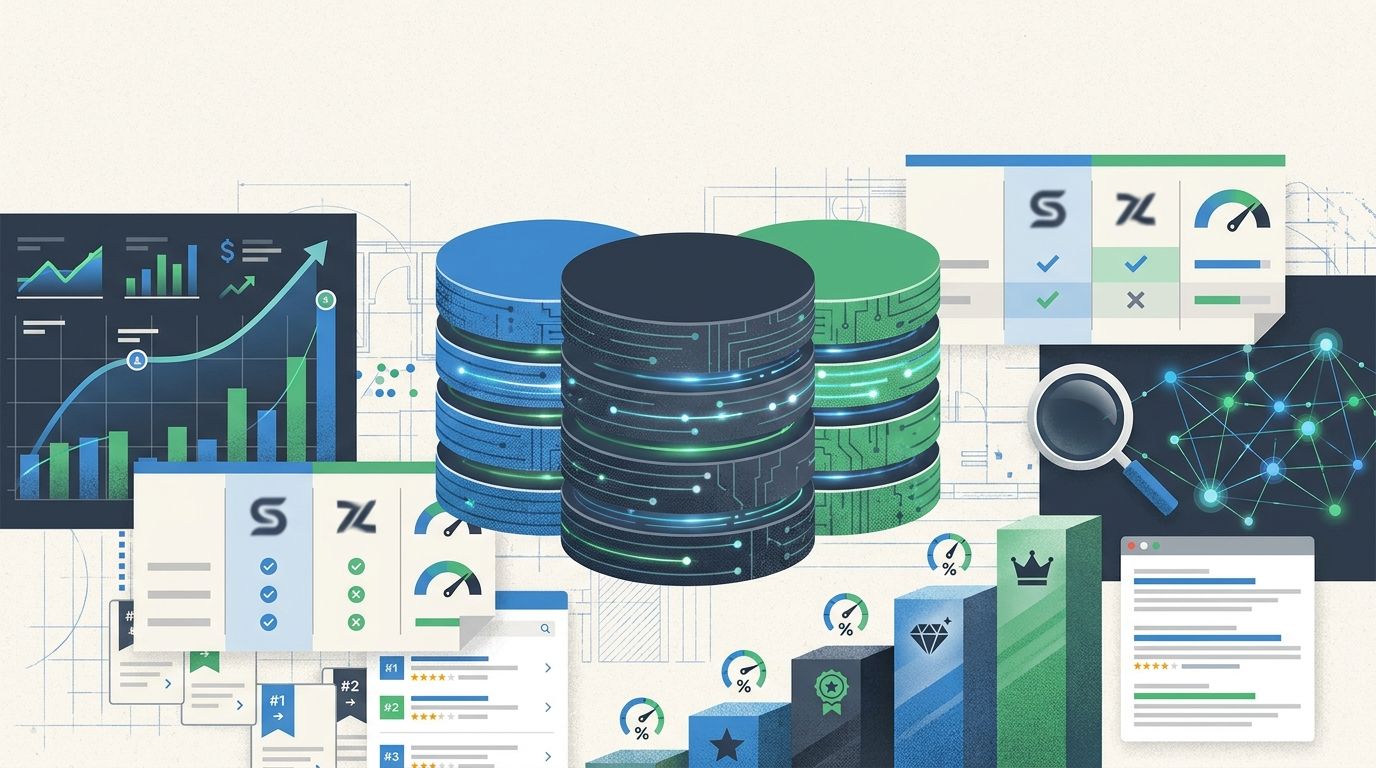
Ahrefs Leads SEO Platform Database Capacity as Adobe-Owned Semrush and Budget-Focused Serpstat Serve Distinct Market Segments
Ahrefs maintains the largest backlink database among leading SEO platforms with 35 trillion live links and 16 years of historical data, according to a comprehensive tool comparison published August 29 by TheNextHint. The analysis evaluated Semrush, Serpstat, and Ahrefs across database capacity, technical SEO features, and pricing structures as the SEO software market heads toward $195.99 billion by 2034 at a 13.37% compound annual growth rate between 2025 and 2034.
The comparison arrives as digital marketing teams navigate tool selection amid platform consolidation—Adobe acquired Semrush in April 2026—and diverging pricing strategies that position each platform for different organizational segments.
Database Scale Separates Platforms
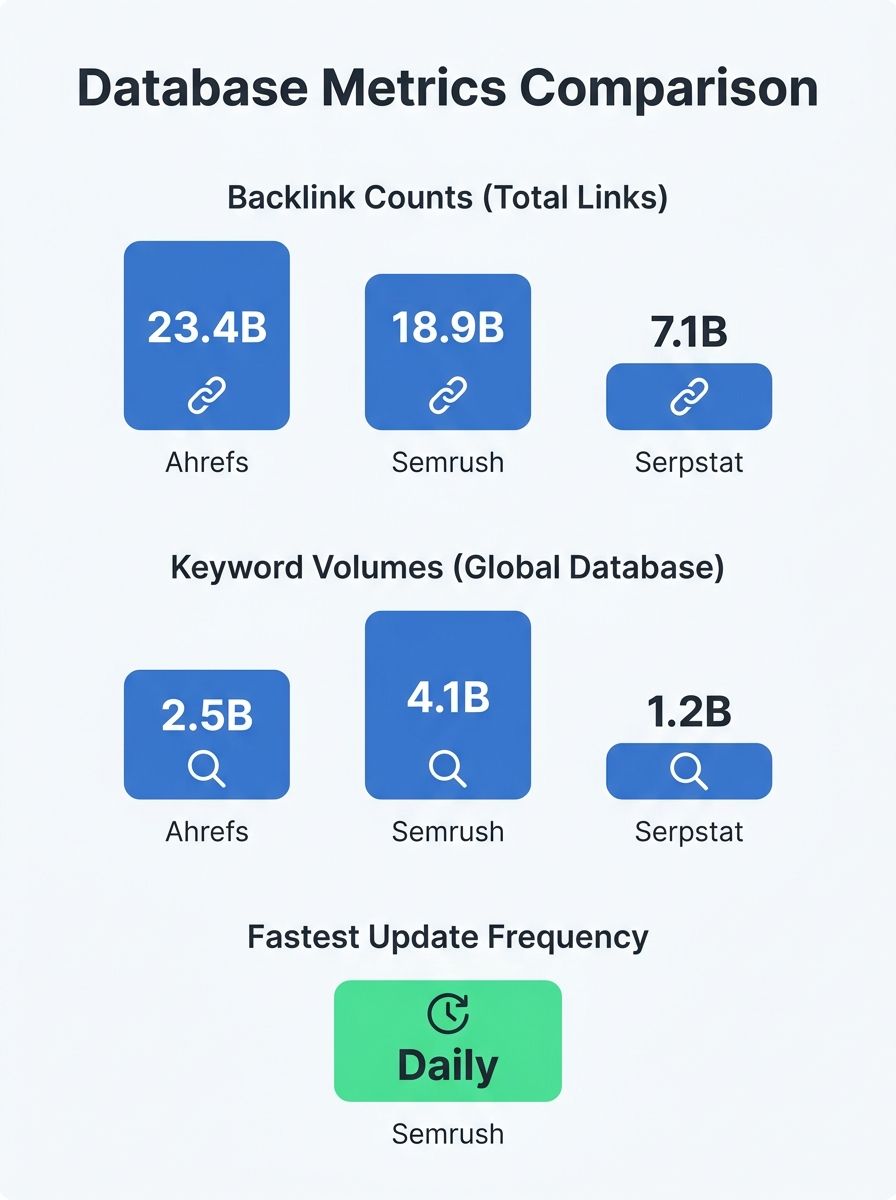
Ahrefs operates on 19.2 billion indexed content pages, 35 trillion live backlinks, and 28.7 billion filtered keywords across 217 countries, according to the analysis. The platform processes 400 million monthly AI prompts and maintains the industry's deepest historical dataset at 16 years of archived link data.
Semrush tracks 28 billion keywords, 43 trillion backlinks, and 808 million domain profiles across 142 geographic databases, TheNextHint reported. The platform analyzes traffic patterns from over 200 million real-time users in 190 countries and has processed 261 million large language model prompts.
Serpstat's database spans 7 billion keywords, 1.1 trillion backlinks, and 470 million referring domains across 230 regions, the comparison found. The platform compiles data from the top 100 Google search results and offers 2 billion keywords in search engine results page analysis.
Technical Auditing Features Vary by Platform Focus
Semrush provides device-specific crawl reports for desktop and mobile optimization, on-page analysis covering title tags and meta descriptions, and site health tracking that prioritizes issues by importance and difficulty level, according to the framework. The platform's real-user behavior integration extends beyond keyword-only ranking strategies.
Ahrefs' Structure Explorer visualizes page depth from homepage positioning to maintain flat site architecture, TheNextHint noted. The platform delivers detailed on-page SEO reports but concentrates technical features on backlink profile analysis rather than comprehensive site auditing.
Serpstat offers basic crawling issue detection, indexing status checks, and site structure analysis with AI-driven content optimization tools, the comparison showed. Advanced site audit features remain locked in higher-tier pricing plans, limiting technical depth for entry-level subscribers.
Teams evaluating technical SEO capabilities should assess whether backlink intelligence, comprehensive site health monitoring, or budget-constrained basic auditing aligns with organizational priorities, similar to the structured testing frameworks enterprise SEO teams now use for AI search performance measurement.
Client Portfolios Reflect Market Positioning
Fortune 500 adoption splits across platforms by use case, the analysis found. Ahrefs serves 44% of Fortune 500 companies including eBay, Dell, Accenture, PlayStation, IBM, and Pinterest. Semrush counts P&G, Samsung, Decathlon, FedEx, and Amazon among clients following Adobe's April acquisition. Serpstat supports Deloitte, Visa, Uber, and Shopify alongside its 1.1 million global user base.
Pricing structures span $50 to $129 monthly depending on feature tiers, TheNextHint reported, though the analysis did not specify per-platform pricing breakdowns or annual contract discounts.
The Takeaway
TheNextHint's comparison frames tool selection as a three-way split: Ahrefs for organizations prioritizing backlink intelligence and deep historical data, Semrush for marketing teams requiring all-purpose SEO and competitor analysis under Adobe's enterprise ecosystem, and Serpstat for small businesses needing essential features at constrained budgets. The August 29 framework arrives as CMOs balance platform consolidation risks—Adobe's Semrush acquisition concentrates market power—against specialized tool advantages in backlink analysis and cost efficiency. Business owners evaluating platforms should weight database scale against actual workflow needs, particularly as the SEO software market's projected 13.37% growth rate through 2034 suggests vendors will continue diverging into specialized versus comprehensive positioning rather than converging on feature parity.
Marcus Webb
Digital marketing consultant and agency review specialist. With 12 years in the SEO industry, Marcus has worked with agencies of all sizes and brings an insider perspective to agency evaluations and selection strategies.
Related Articles
SEO Tools Analysis Identifies 20 Leading SERP Tracking and Website Audit Platforms for 2026 Budget Tiers
TechyFlavors published a comprehensive analysis of 20 leading SEO tools on May 21, identifying the top SERP tracking and website audit platforms for 2026 across free and premium price tiers, according to the evaluation posted on the digital marketing publication's website.
SEO Tool Traffic Estimates Run 7 to 9 Times Higher Than Google Search Console Data in Side-by-Side Testing
Ahrefs and Semrush traffic estimates exceeded actual Google Search Console clicks by 7.1 and 9.2 times respectively when tested on the same domain during the same measurement period, according to a six-test analysis published September 25 by Arfadia, an Indonesian SEO agency.
Search Engine Watch Publishes 12-Month Serpstat Review Examining Pricing, AI Features, and Accuracy
Search Engine Watch published a year-long evaluation of Serpstat on August 9, examining the platform's pricing structure, feature accuracy, and three newly added AI-focused tools, according to a review written by the publication's owner after twelve months of continuous use.
Explore more topics