
Google Extends Spam Update Rollout Window to Two Weeks as Search Console Adds Image-Search Filter
Google extended its spam update rollout window to two weeks for the September 2026 update launched September 24, marking a shift from the sub-three-day completion pattern of three prior 2026 updates, according to Search Engine Journal's weekly SEO update roundup.
 Marcus Webb··4 min read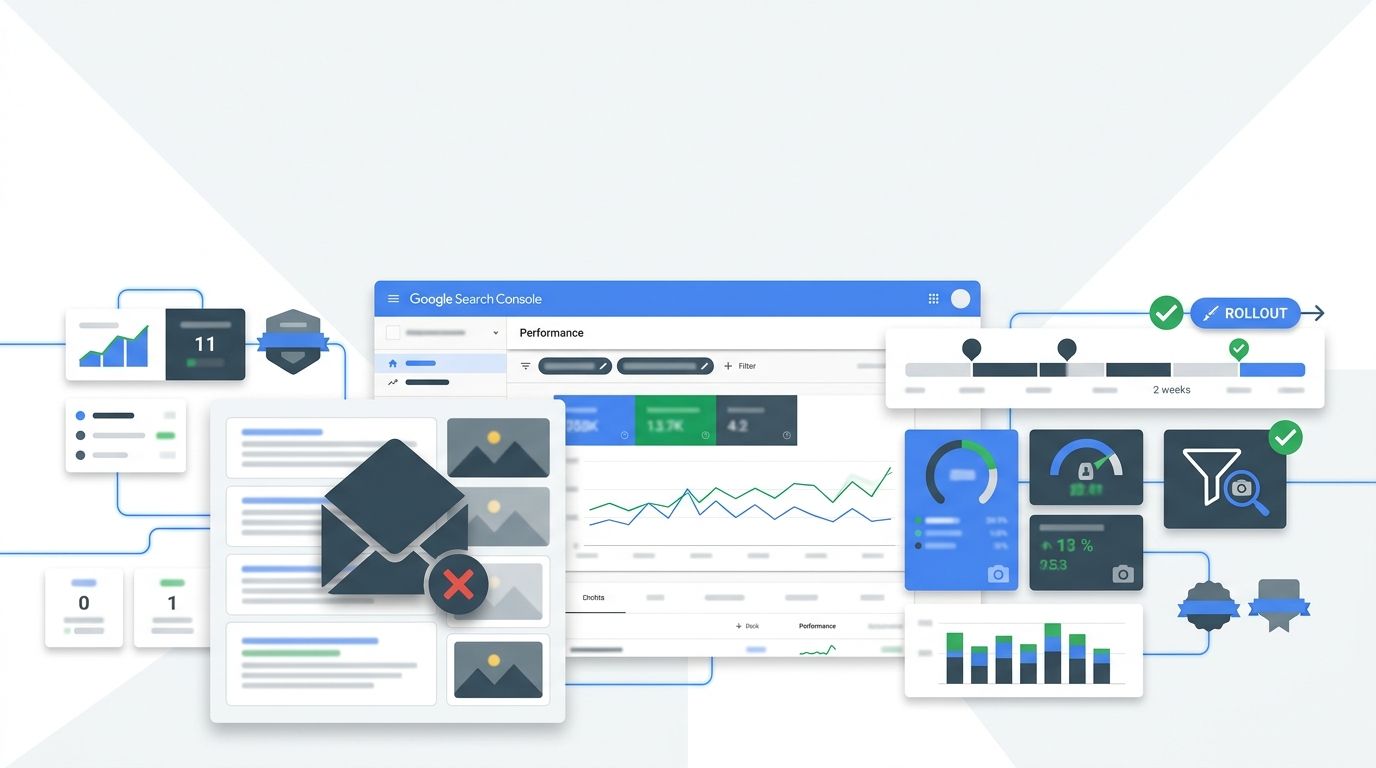
Google Extends Spam Update Rollout Window to Two Weeks as Search Console Adds Image-Search Filter
Google extended its spam update rollout window to two weeks for the September 2026 update launched September 24, marking a shift from the sub-three-day completion pattern of three prior 2026 updates, according to Search Engine Journal's weekly SEO update roundup. The company simultaneously rolled out multimodal search filtering in Google Search Console, allowing agencies to isolate traffic from image-based queries including Google Lens and Circle to Search.
The spam update began at 9:15 a.m. PDT on September 24 and applies globally across all languages, according to Google's Search Status Dashboard. Google completed its March, June, and August 2026 spam updates within 2 days and 16 hours, each with a stated rollout window of "a few days." The company has not disclosed what manipulative practices the September update targets.
Search Console Adds Multimodal Query Filter
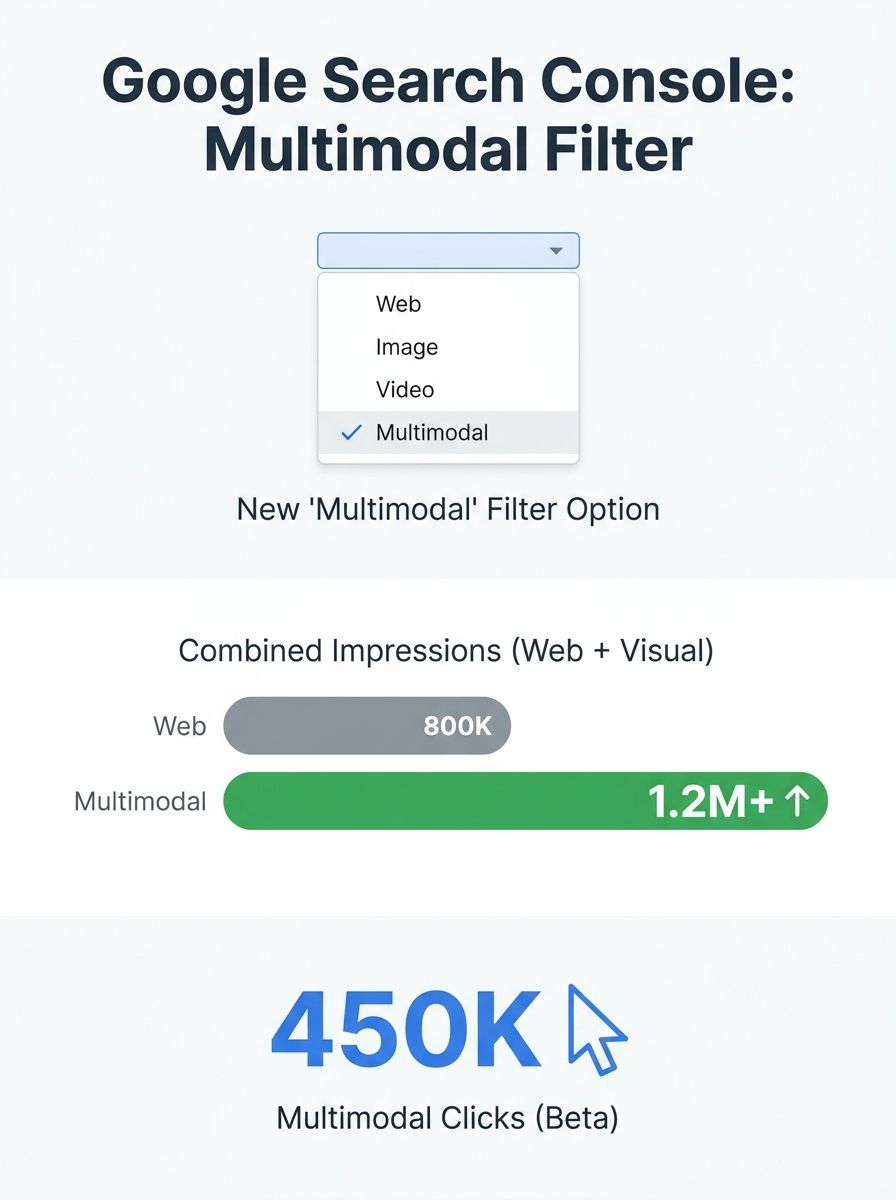
Google rolled out a multimodal filter in Search Console's Performance report to segment searches initiated with images rather than text. The filter covers Google Lens, Circle to Search on Android, image uploads to Google Search, and Chrome's right-click "Search this image" feature, according to the company's announcement. The option appears under the Web search type and applies globally.
Query data remains unavailable for multimodal searches because users "mostly use images rather than text," according to Google's dimensions help documentation. The multimodal reporting also extends to the generative AI performance report. E-commerce sites and product-focused pages can now compare image-initiated traffic against text-based queries by country and device, though page-level data does not identify which specific image triggered the search.
Mueller Addresses Cross-Domain Canonical De-Indexing Case
Google's John Mueller responded to Reddit reports of pages disappearing from Google's index while unrelated casino sites appeared as their canonical URLs. A site owner reported that Google treated casino betting pages as canonical for company and supplier pages on their domain. A second commenter described identical behavior, finding the third-party canonical indexed under a generic JavaScript error title and suspecting Googlebot had crawled an error page.
Mueller confirmed that scenario as one possibility and directed the discussion toward Search Console's live URL test. "Each possible outcome leaves the page 'not showing in search for normal content,'" Mueller wrote in a follow-up reply. He recommended automated testing before deploying changes and suggested fetching critical pages on a schedule "so that you can fix them before they become stable problems for search engines to pick up."
Publisher Network Reports 40.2% Year-Over-Year Search Decline
Google Search and Discover traffic declines accelerated in the second year across Chartbeat's publisher network, according to the analytics platform's 2026 Publisher Playbook. Google Search fell 40.2 percent year over year from July 2025 to July 2026, compared to a 21.9 percent decline the prior year. Discover's decline grew from 6.6 percent to 34.3 percent over the same measurement period.
The playbook does not specify whether the figures measure raw pageviews or each channel's share of total pageviews. The network skews toward news and media publishers. Direct, internal, and dark social traffic expanded their share of pageviews during the two-year period, which Chartbeat described as channels media companies have "greater control over."
Field Experiment Shows AI Mode Reduces Website Clickthrough
Forcing U.S. users to search through Google's AI Mode reduced clickthrough to external websites by 18.8 percentage points compared to standard Google Search, according to a preprint field experiment from University of Pennsylvania and Northeastern University researchers. The study tracked 1,100 participants through a three-day baseline and seven-day treatment period using a browser extension.
Participants assigned to AI Mode also gave lower ratings for trust in information on Google and satisfaction with search results. During the baseline period, participants used AI Mode for 0.6 percent of their searches, making the experiment a forced full-adoption scenario rather than organic usage. Google's Liz Reid wrote in August 2025 that organic click volume from Search to websites had been "relatively stable" year over year, though that statement covered standard Search rather than AI Mode traffic patterns.
The research addresses a distinct case from normal Search behavior, measuring what full AI Mode adoption would mean for website traffic rather than forecasting outcomes for individual sites under current mixed-use conditions. The 18.8-percentage-point reduction represents the gap between forced AI Mode users and a control group using standard Search during the same period.
Reading Between the Lines
The two-week spam update window breaks from Google's 2026 pattern and complicates early-stage impact assessment for agencies monitoring client rankings. Traffic and ranking shifts during the first week may not reflect the final state, particularly for sites near algorithmic boundaries where incremental rollout phases could swing classifications. The extended timeline suggests either broader scope than prior updates or more conservative deployment testing—neither of which Google has confirmed.
The multimodal filter fills a reporting gap for visual search channels that agencies have measured indirectly through page-level traffic patterns. Isolating Lens and Circle to Search traffic allows clearer attribution for image optimization work, though the lack of query data limits diagnostic value when multimodal traffic underperforms. E-commerce and local service businesses with strong visual assets gain a concrete workflow improvement; content publishers relying on text-based discovery gain a new metric to confirm what they likely already knew.
The casino canonical case illustrates the compounding risk of server errors during Googlebot crawls—a single malformed response can strand pages outside the index while Google caches an unrelated URL as authoritative. Mueller's emphasis on automated monitoring before deployment is standard hygiene, but the specific failure mode (third-party canonical injection during error states) suggests checking canonical tags in error-handling code paths, not just successful page renders.
Marcus Webb
Digital marketing consultant and agency review specialist. With 12 years in the SEO industry, Marcus has worked with agencies of all sizes and brings an insider perspective to agency evaluations and selection strategies.
Related Articles
Google's June 2026 Spam Update Targets AI Citation Manipulation as Violation of Core Search Policies
Google's June 2026 spam update, which began rolling out on June 24, explicitly treats efforts to manipulate AI-generated search responses—including buying citations or altering AI Overviews—as violations of the company's spam policies, according to Search Engine Journal. The update expands Google's
Google Adds Further Exploration Links to AI Overviews as Publisher Traffic Decline Reaches 58 Percent
Google deployed five updates to AI Overviews and AI Mode on May 6, 2026, designed to direct more traffic to publisher websites, according to The Next Web. The rollout arrives as the search giant faces antitrust lawsuits from Penske Media and a European Commission investigation into whether AI-genera

Google Launches May 2026 Core Update During I/O Week as Search Box Gets AI-Powered Redesign
Google began rolling out its May 2026 core update on May 21, the second core update this year and the fourth confirmed ranking update of 2026, according to the Google Search Status Dashboard. The rollout coincides with Google I/O announcements including the largest Search box redesign in over 25 yea
Explore more topics