
Google Launches September 2026 Spam Update Affecting All Languages Globally
Google launched its September 2026 spam update on September 24 at 9:15 a.m. PDT, targeting manipulative search practices globally across all languages, according to the company's Search Status Dashboard.
 Marcus Webb··3 min read
Google Launches September 2026 Spam Update Affecting All Languages Globally
Google launched its September 2026 spam update on September 24 at 9:15 a.m. PDT, targeting manipulative search practices globally across all languages, according to the company's Search Status Dashboard. The rollout may take up to two weeks to complete, marking the fourth spam-focused algorithm adjustment this year.
The search engine did not provide specific details about which spam tactics or policies the update targets. "Released the September 2026 spam update, which applies globally and to all languages. The rollout may take up to two weeks to complete," the status update stated.
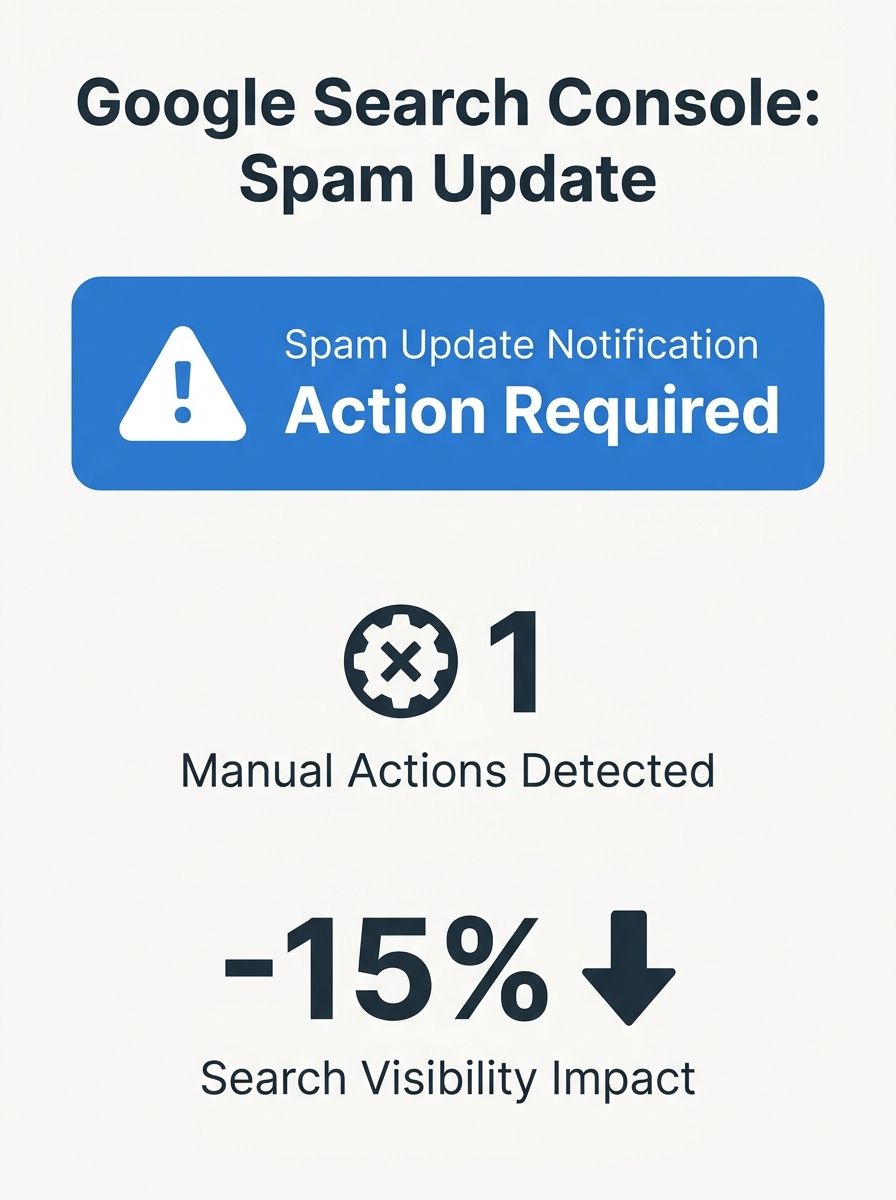
Fourth Consecutive Spam Algorithm Adjustment in 2026
Google deployed three previous spam updates in March, June, and August 2026. The March update completed in 19 hours and 30 minutes, while June required 2 days and 1 hour, and August extended to 2 days and 16 hours, according to Search Engine Journal's analysis of the rollout timelines.
The September estimate of up to two weeks represents a significantly longer window than Google provided for earlier 2026 spam updates. The company described the previous three rollouts as taking "a few days" each, though none reached the two-week threshold in practice.
Google uses spam updates to improve its automated detection systems for search manipulation. The company has not disclosed whether this update addresses a specific spam policy violation category or represents broader system enhancements.
Impact on Search Rankings and Traffic
Sites experiencing ranking or traffic changes during the rollout period should examine Search Console data alongside the update timeline, according to Google's guidance. Properties that violate spam policies may rank lower or disappear from search results entirely.
"Google says making changes may help a site improve if its automated systems learn over a period of months that the site complies with its spam policies," Search Engine Journal reported. The recovery timeframe extends across multiple months as Google's systems reassess site quality signals.
The global scope means the update affects search results in every language and geographic market simultaneously. Previous spam updates this year followed the same universal deployment pattern, creating ranking volatility across international markets during rollout windows.
Technical Detection and Policy Framework
Google's spam detection operates through automated systems that identify patterns violating the company's spam policies. The September update represents "notable improvements" to these systems, according to the status dashboard language.
Sites should review Google's published spam policies to assess compliance. The policy framework covers practices including automatically generated content, scraped material, deceptive redirects, hidden text, doorway pages, and link schemes.
Agencies managing multiple client properties should monitor ranking fluctuations across portfolios during the two-week window. The extended rollout period increases the likelihood of staggered impact across different sites and industries, as Google's systems may process segments of the web index at varying speeds.
This spam update follows Google's expansion of AI Overviews, which has already altered how sites appear in search results. Combined with ongoing spam detection improvements, the search landscape continues shifting toward automated quality assessment across multiple ranking layers.
Why This Matters Now
SEO agencies and marketing managers evaluating search performance must distinguish between spam update penalties and normal ranking volatility. The two-week rollout window means sites showing traffic declines between September 24 and October 8 should assess compliance with Google's spam policies before pursuing other optimization strategies.
For agencies managing client portfolios, this fourth spam update in 2026 signals Google's continued prioritization of manipulation detection over other ranking factors. Clients whose sites rely on borderline tactics face increasing risk as automated systems improve detection accuracy across languages and markets.
The extended rollout estimate suggests either broader system changes than previous 2026 updates or Google anticipating higher complexity in global deployment. CMOs evaluating SEO agency performance should recognize that legitimate ranking declines during this period may stem from algorithm enforcement rather than agency execution failures, requiring policy compliance audits before strategy adjustments.
Marcus Webb
Digital marketing consultant and agency review specialist. With 12 years in the SEO industry, Marcus has worked with agencies of all sizes and brings an insider perspective to agency evaluations and selection strategies.
Related Articles

Google Launches Third Spam Algorithm Update of 2026 Affecting All Languages Globally
Google initiated a global spam algorithm update on August 18 at 9:27 AM Pacific, marking the third such deployment in 2026, according to the company's Search Status Dashboard. The rollout affects all languages and may require several days to complete.

Google Launches June 2026 Spam Update Targeting Low-Quality Content Across All Languages
Google deployed a global spam-focused algorithm update on June 24, 2026, designed to reduce the visibility of websites violating the company's spam policies, according to an announcement from Advait Technology Labs. The June 2026 Spam Update applies across all languages and regions and is expected t

Google's June 2026 Spam Update Targets AI Citation Manipulation as Violation of Core Search Policies
Google's June 2026 spam update, which began rolling out on June 24, explicitly treats efforts to manipulate AI-generated search responses—including buying citations or altering AI Overviews—as violations of the company's spam policies, according to Search Engine Journal. The update expands Google's
Explore more topics