
Google Launches Third Spam Algorithm Update of 2026 Affecting All Languages Globally
Google initiated a global spam algorithm update on August 18 at 9:27 AM Pacific, marking the third such deployment in 2026, according to the company's Search Status Dashboard. The rollout affects all languages and may require several days to complete.
 Marcus Webb··3 min read
Google Launches Third Spam Algorithm Update of 2026 Affecting All Languages Globally
Google initiated a global spam algorithm update on August 18 at 9:27 AM Pacific, marking the third such deployment in 2026, according to the company's Search Status Dashboard. The rollout affects all languages and may require several days to complete.
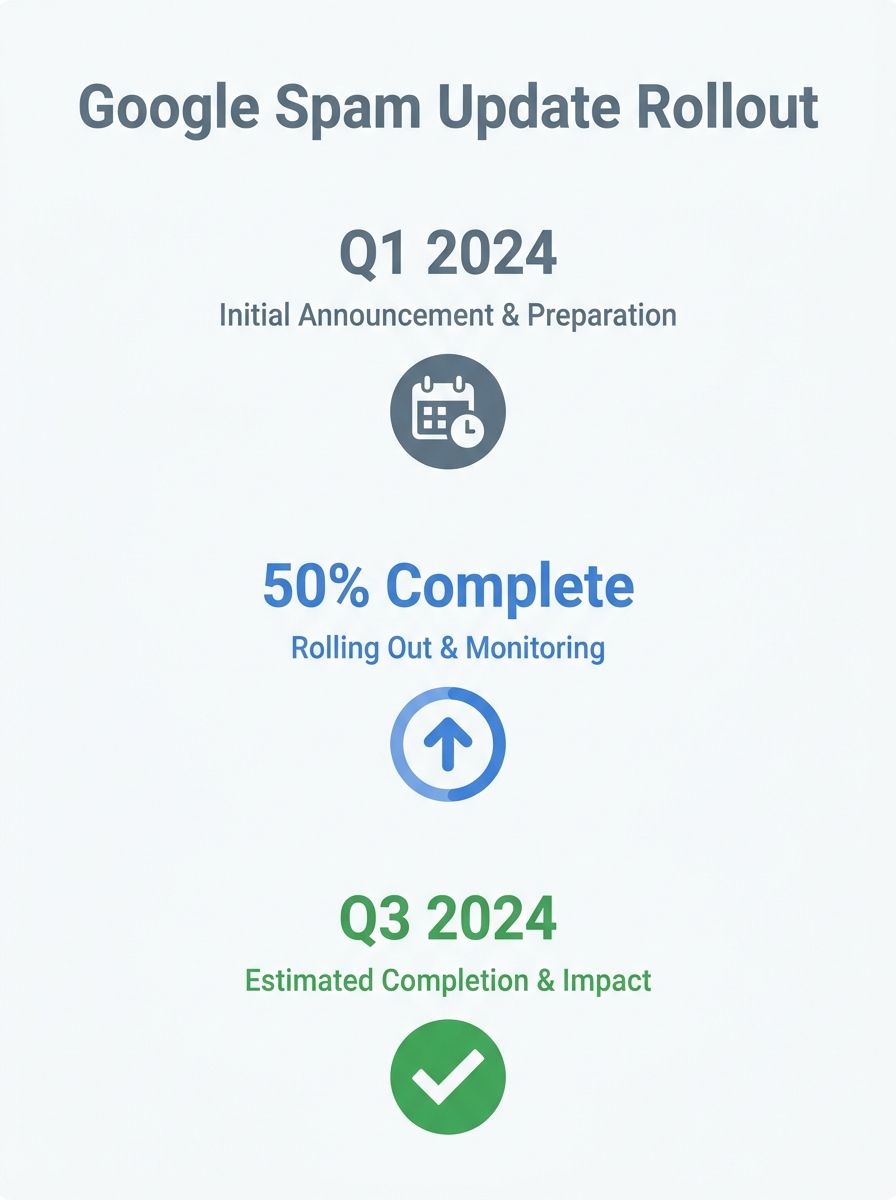
Update Scope and Timeline
The Search Status Dashboard logged the update as an incident impacting ranking at 9:27 AM Pacific on August 18, with Google publishing the release note one minute later at 9:28 AM PDT. As of August 19, Google had not published a supporting blog article or updated its spam policies page, which remains unchanged since December 2025.
The rollout applies the same global, multi-language scope that characterized Google's previous spam updates this year. Google's documentation indicates the update will close once its automated systems finish processing, following the pattern set by earlier 2026 deployments.
Prior 2026 Spam Updates
The August deployment follows two earlier spam-focused updates in 2026. The March 2026 spam update completed in 19 hours and 30 minutes, marking the fastest confirmed rollout in the Search Status Dashboard's history. The June 2026 spam update required 2 days and 1 hour to finish, according to dashboard records.
The June update followed a May 15 clarification stating that Google's spam policies extend to attempts manipulating generative AI responses in Search, including AI Overviews and AI Mode. Google has not confirmed whether the August update specifically targets AI manipulation behavior, nor has it announced new spam policy categories alongside this rollout.
Sites experiencing ranking movement during the rollout should examine Search Console data from August 18 forward to identify patterns aligning with the update's timeline. Google's spam documentation states that recovery from penalties can require months, as the company's automated systems need extended observation periods to verify sustained policy compliance.
Policy Framework Unchanged
Google has not introduced new spam policy types with the August 2026 update. The company's existing spam policies—covering manipulative link schemes, automatically generated content, cloaking, sneaky redirects, and other deceptive practices—remain the compliance framework sites must follow.
The absence of new policy announcements suggests the August update refines enforcement of established rules rather than expanding the spam definition. Sites seeing traffic declines should audit existing pages against Google's published spam policy documentation, which outlines prohibited techniques and provides examples of violations.
This pattern differs from Google's August 2026 core algorithm update, which shifted rankings for 45% of tracked websites while rewarding Core Web Vitals compliance—a broader quality-signal adjustment rather than a spam-specific enforcement action.
Context and Outlook
For SEO agencies and business owners, the August spam update arrival during an already volatile ranking period compounds the challenge of isolating performance causes. Sites experiencing movement between August 18 and the update's completion date face diagnostic ambiguity: traffic shifts could stem from spam enforcement, lingering effects from the August core update, or unrelated seasonal patterns.
The three-spam-update cadence in 2026 represents heightened enforcement frequency compared to prior years, suggesting Google views manipulative tactics—particularly around AI-generated content and AI Overview gaming—as requiring more aggressive intervention. Agencies managing client portfolios should prioritize compliance audits over speculative recovery tactics, given Google's stated timeline that automated re-evaluation requires months of sustained policy adherence.
The lack of new policy categories means sites already following Google's spam guidelines face minimal risk from this update. The enforcement action likely targets persistent violators and sites attempting to exploit AI search features through manipulative techniques flagged in the May 15 clarification. Sites with clean link profiles, original content, and transparent user experiences should see ranking stability as the rollout completes.
Marcus Webb
Digital marketing consultant and agency review specialist. With 12 years in the SEO industry, Marcus has worked with agencies of all sizes and brings an insider perspective to agency evaluations and selection strategies.
Related Articles

Google Launches September 2026 Spam Update Affecting All Languages Globally
Google launched its September 2026 spam update on September 24 at 9:15 a.m. PDT, targeting manipulative search practices globally across all languages, according to the company's Search Status Dashboard.

Google Launches June 2026 Spam Update Targeting Low-Quality Content Across All Languages
Google deployed a global spam-focused algorithm update on June 24, 2026, designed to reduce the visibility of websites violating the company's spam policies, according to an announcement from Advait Technology Labs. The June 2026 Spam Update applies across all languages and regions and is expected t

Google's June 2026 Spam Update Targets AI Citation Manipulation as Violation of Core Search Policies
Google's June 2026 spam update, which began rolling out on June 24, explicitly treats efforts to manipulate AI-generated search responses—including buying citations or altering AI Overviews—as violations of the company's spam policies, according to Search Engine Journal. The update expands Google's
Explore more topics