
Three Global SEO Agency Launches Signal Enterprise Shift to Vertical Specialization—What This Means for Generalist Shops
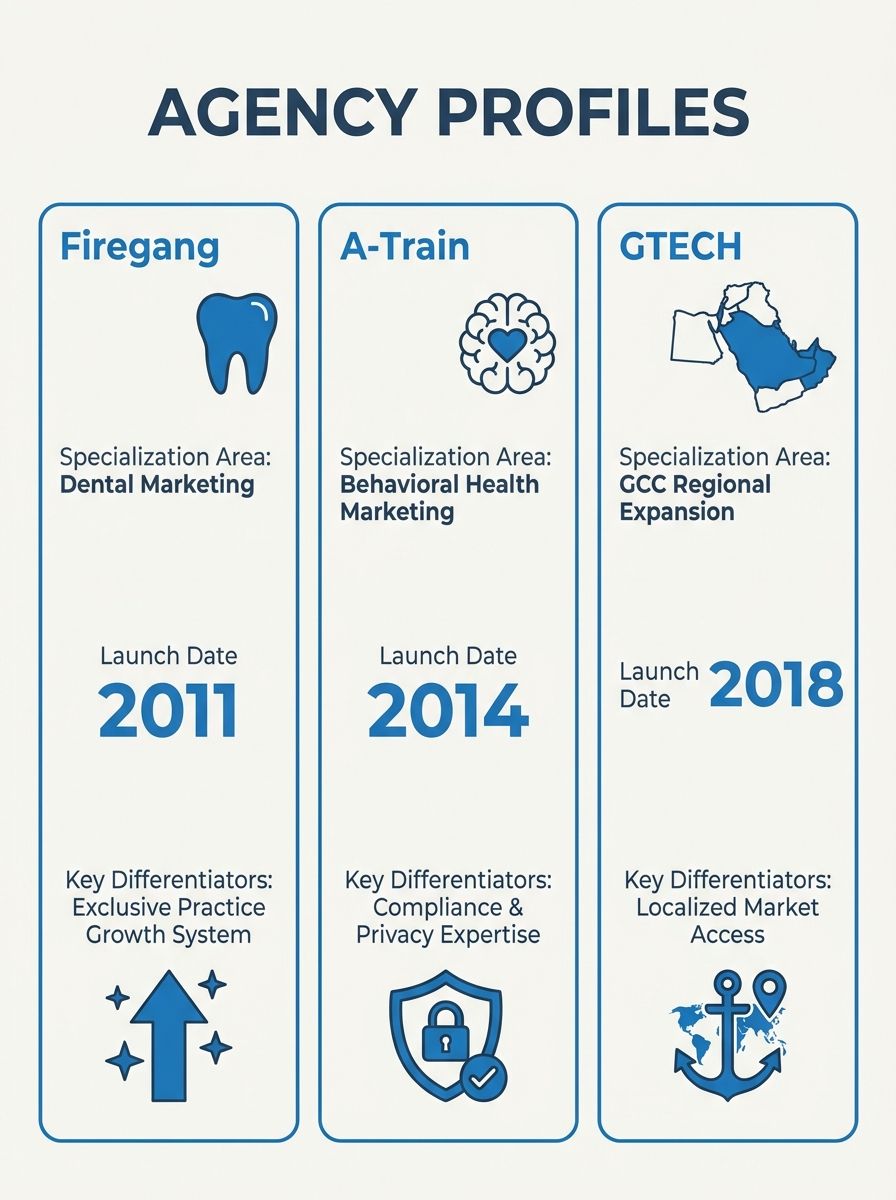
Three agency launches in six weeks—Firegang Dental Marketing's expanded vertical platform on April 23, A-Train Marketing's behavioral health strategy framework on April 17, and GTECH's four-layer search optimization model on March 16—all share one structural feature that matters more than their indi
 Marcus Webb··9 min read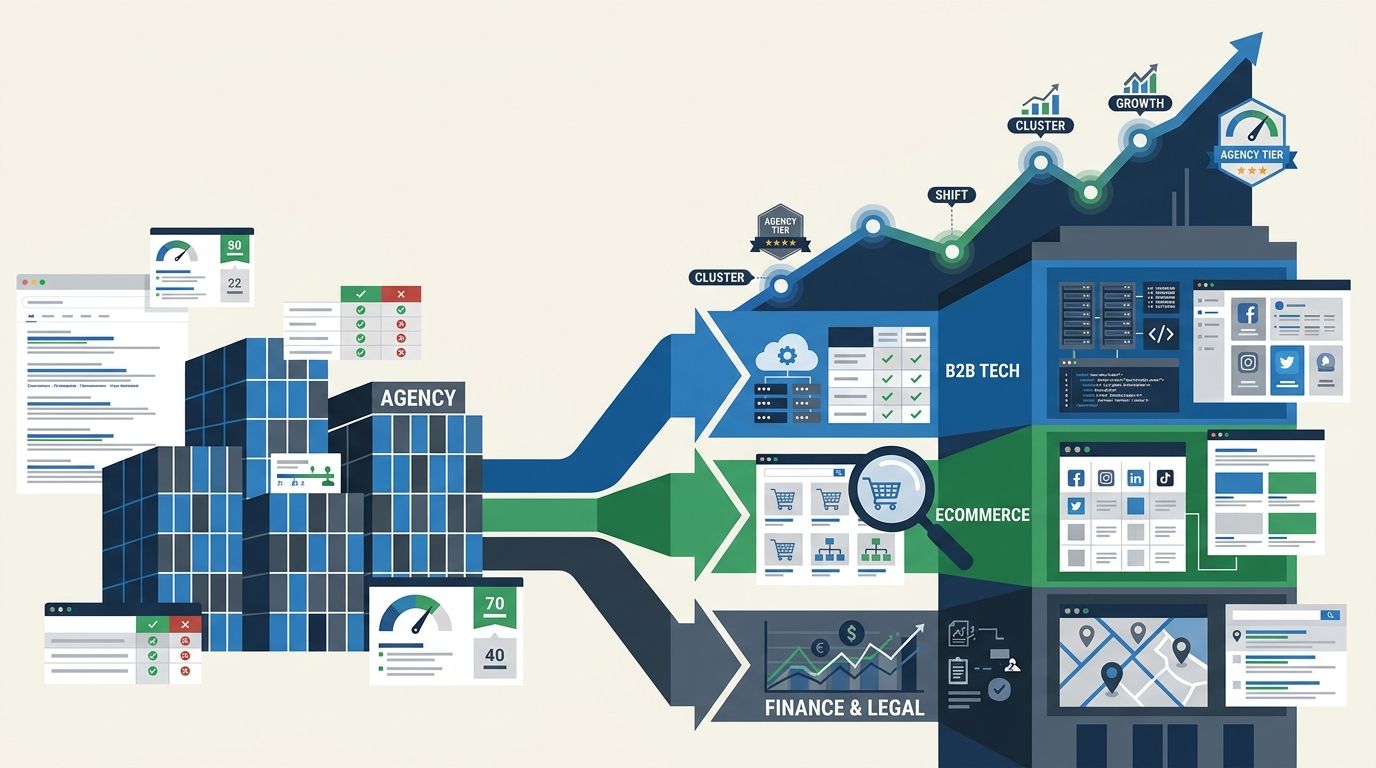
Three Global SEO Agency Launches Signal Enterprise Shift to Vertical Specialization
Three agency launches in six weeks—Firegang Dental Marketing's expanded vertical platform on April 23, A-Train Marketing's behavioral health strategy framework on April 17, and GTECH's four-layer search optimization model on March 16—all share one structural feature that matters more than their individual service lists. Each one deliberately narrows its addressable market. And each one is growing faster than the generalist competitors they left behind.
The conventional wisdom says broad service offerings protect revenue. More clients, more industries, more keyword targets, more safety. These three launches argue the opposite: that deep vertical knowledge compounds into pricing power, faster execution, and client retention rates that generalist shops can't match. Here's how the mechanism actually works, layer by layer.
What Firegang, A-Train, and GTECH Actually Built
Firegang Dental Marketing didn't launch a new agency. They scaled an existing model that treats dentistry as its entire universe. As documented in Search Engine Magazine's Local SEO Playbook analysis, Firegang's edge comes from pre-built content libraries for procedures like Invisalign, implants, and emergency care. When a new dental practice signs on, Firegang doesn't start keyword research from scratch. They deploy a tested content architecture that already maps to patient search behavior, trimming onboarding from weeks to days.
A-Train Marketing published its strategic guide on April 17, focusing exclusively on behavioral and mental health organizations. CEO Tim Zercher's argument is direct: vertical experts eliminate the learning curve that cross-industry generalists carry as dead weight. A-Train's differentiator is HIPAA-compliant advertising expertise baked into every campaign template, not bolted on after a compliance review flags problems.
GTECH, the Dubai-based agency founded in 2008, unveiled a 2026 framework integrating SEO, Generative Engine Optimization (GEO), AI Interpretation Optimization (AIO), and Search Experience Optimization (SXO). Their vertical angle is regional rather than industrial: Arabic-language SEO and Gulf Cooperation Council-specific search behaviors across more than 300 client accounts. This kind of geotargeted SEO services depth is something a generalist shop with a "we serve all markets" pitch can't replicate without years of investment.
Pre-Built Knowledge Eliminates the Discovery Phase
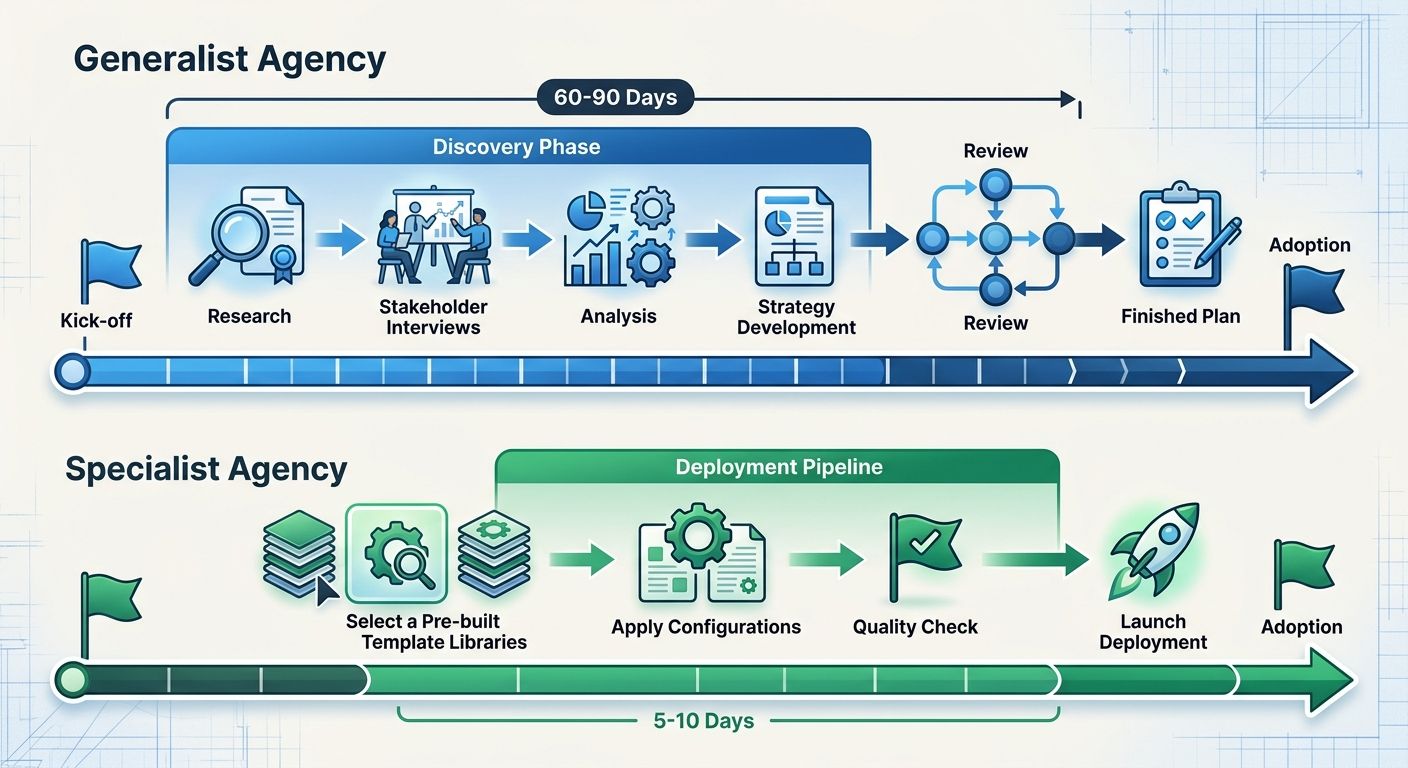
The first layer of the vertical specialization mechanism is accumulated intellectual capital. Every agency, regardless of focus, spends its first 60 to 90 days on a new client doing discovery work: industry research, competitive analysis, keyword mapping, content audits. Generalist agencies repeat this cycle for every new vertical they enter.
Specialist agencies don't. Firegang already knows which dental procedure keywords convert at the highest rate in each metro area. A-Train already has HIPAA-compliant ad templates approved and tested. GTECH already understands how Arabic-language queries behave differently from English-language equivalents in the same market.
This accumulated knowledge translates directly into margin. When you've already built the keyword universe, the content templates, and the technical architecture for an industry, your cost to serve each new client drops significantly. A generalist agency quoting $8,000/month for dental SEO might be spending $3,000 of that on research and ramp-up that a specialist has already amortized across dozens of previous clients. The specialist can charge $6,500, deliver faster results, and still maintain higher margins.
As Search Engine Journal noted in its comparison of specialist versus generalist approaches, the complexity threshold is the deciding factor. When SEO is a single line item on a large agency's service menu, it rarely gets the depth of attention that a specialized practice demands.
Compliance Fluency as a Structural Moat
The second layer is regulatory knowledge, and it's where vertical SEO specialization 2026 gets genuinely interesting for enterprise buyers.
Healthcare SEO, financial services SEO, and legal SEO all operate under advertising restrictions that don't apply to ecommerce or SaaS. A dental practice can't make certain claims in ad copy. A behavioral health facility has HIPAA constraints on testimonials and reviews. A financial advisory firm faces SEC and FINRA disclosure requirements.
Generalist agencies handle these constraints reactively. They draft content, submit it for client review, get flagged by compliance, revise, resubmit, and lose two to four weeks in the cycle. Specialist agencies handle them proactively because they've already internalized the rules.
AccuraCast's analysis of financial services SEO specialization frames this bluntly: for financial services firms, a specialist agency is typically the more efficient choice because generic SEO strategies in regulated industries carry meaningful risk. That risk isn't theoretical. I've seen agencies lose enterprise healthcare clients because a single blog post triggered a compliance violation that the agency didn't know existed. The content was live for 11 days before in-house legal caught it. By then, the client relationship was beyond repair.
A 2026 enterprise vetting guide describes this as "deep vertical expertise" and identifies intimate knowledge of regulated healthcare environments as a significant strategic advantage. The guide also notes that agencies with this expertise tend to focus on business-centric KPIs like patient acquisition and revenue, rather than vanity metrics like keyword rankings.
This is the moat that's hardest for generalist shops to cross. You can hire an SEO strategist in a week. You can't hire regulatory fluency in a week. That understanding builds over years of client work within a single vertical, and the agencies that have already done that work have a compounding advantage. Enterprises running pilot evaluations, as I've written about in my breakdown of why most agencies fail the enterprise pilot test, increasingly weight compliance readiness as a pass/fail criterion rather than a nice-to-have.
Geotargeted Depth Changes the Economics
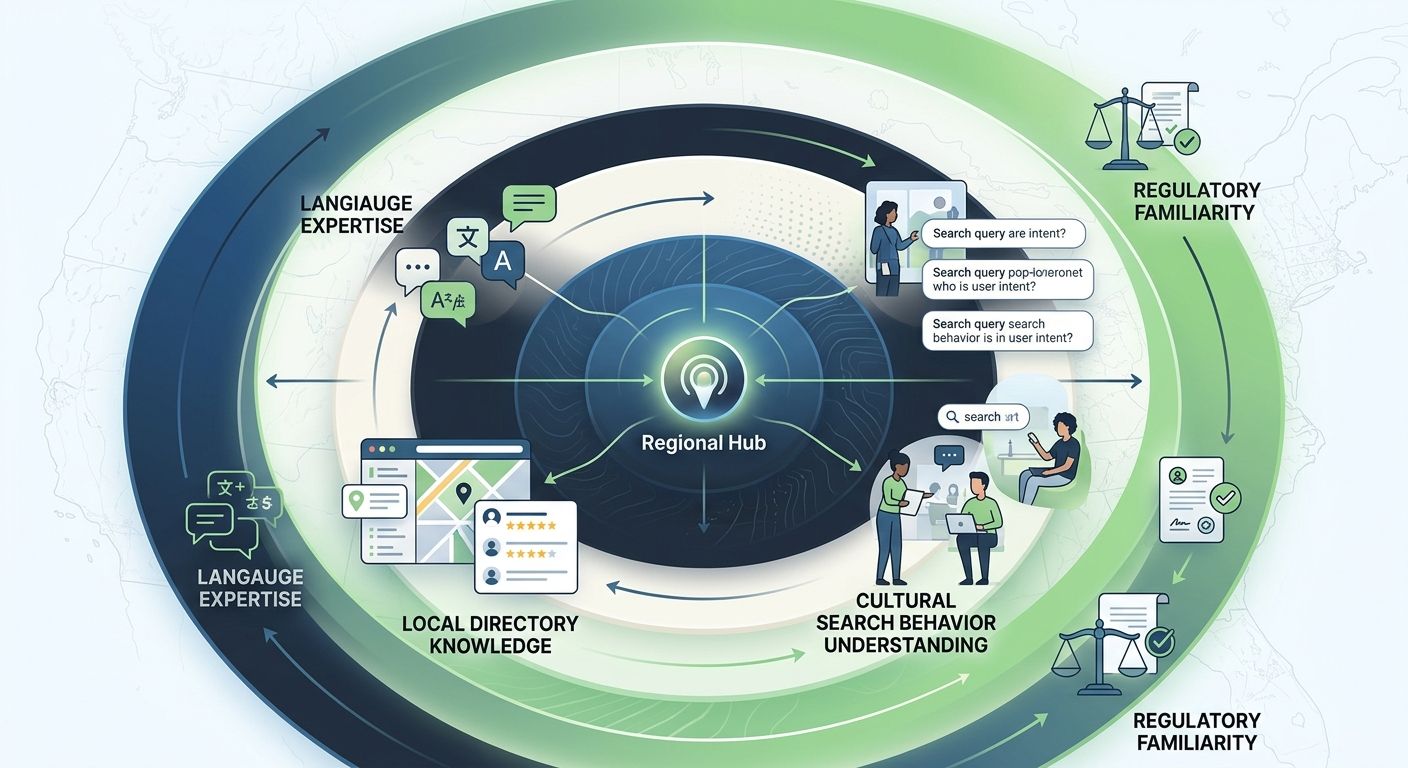
GTECH's launch highlights a variant of vertical specialization that doesn't track to industry verticals at all. Their depth is geographic and linguistic.
The demand for geotargeted SEO services has been growing alongside the broader shift toward local search intent. EnFuse Solutions' research documents that local queries are action-oriented: directions, calls, "buy now" behaviors. Optimizing for those queries captures customers who are closer to conversion, and the competition at the hyperlocal level is substantially thinner than for nationwide keywords.
GTECH's framework integrates this with generative AI optimization, which is where things get structurally different from a standard local SEO play. Their Arabic-language SEO work requires understanding how AI Overviews and generative search tools process right-to-left text, how entity relationships differ across cultural contexts, and how GCC-specific business directories feed into Google's knowledge graph. A generalist agency with no Gulf region experience would need months of trial-and-error to even approximate this understanding.
The same pattern plays out for ecommerce SEO agencies that specialize in specific platforms or markets. An agency that has optimized 200 Shopify Plus stores knows the platform's technical constraints, its crawl budget quirks, and its structured data limitations in a way that a generalist with five Shopify clients never will. Similarly, retail SEO agencies that focus exclusively on brick-and-mortar chains with 50+ locations develop playbooks for store-level landing pages, local inventory ads integration, and review management at scale that don't exist in a generalist's toolkit.
Enterprise Consolidation Is Accelerating the Squeeze
The financial dynamics behind this shift deserve attention because they explain why the trend is accelerating rather than plateauing.
Private equity firms have noticed the margin advantage of vertical agencies. Trinity Hunt Partners' investment in TNT Dental is one documented example of capital flowing specifically toward vertical SEO specialization. The thesis is straightforward: vertical agencies have higher client retention, lower customer acquisition costs, and more predictable revenue. Those are exactly the metrics PE firms optimize for.
This enterprise agency consolidation creates a flywheel effect. As vertical specialists get PE backing, they invest in proprietary tools, hire deeper benches, and acquire smaller competitors within their niche. The gap between their capabilities and a generalist's capabilities in that vertical widens with each investment cycle.
First Page Sage's ranking of top U.S. SEO companies now segments agencies across 10 different niches, reflecting how the market itself has restructured around specialization. The firms that appear at the top of those niche rankings aren't the same firms that dominate the "general SEO" category. They're purpose-built organizations with different team structures, different pricing models, and different retention rates.
For enterprise buyers evaluating partners, this consolidation trend means the shortlist is getting shorter. When an enterprise healthcare system needs SEO support, the vetting process increasingly starts with agencies that have verifiable healthcare track records and ends before generalist agencies even get a pitch meeting. I've covered why enterprise SEO strategies often fail at implementation, and one recurring factor is misalignment between agency expertise and client-industry complexity. Vertical specialists reduce that friction by default.
The same dynamic is playing out in technology verticals. SEO companies for SaaS and tech firms have developed specialized approaches to product-led content, developer documentation optimization, and feature comparison pages that require deep familiarity with software buying cycles and technical audiences.
Where the Model Breaks
Vertical specialization has real limitations, and understanding them matters whether you're an agency deciding where to focus or an enterprise buyer deciding what to prioritize during evaluation.
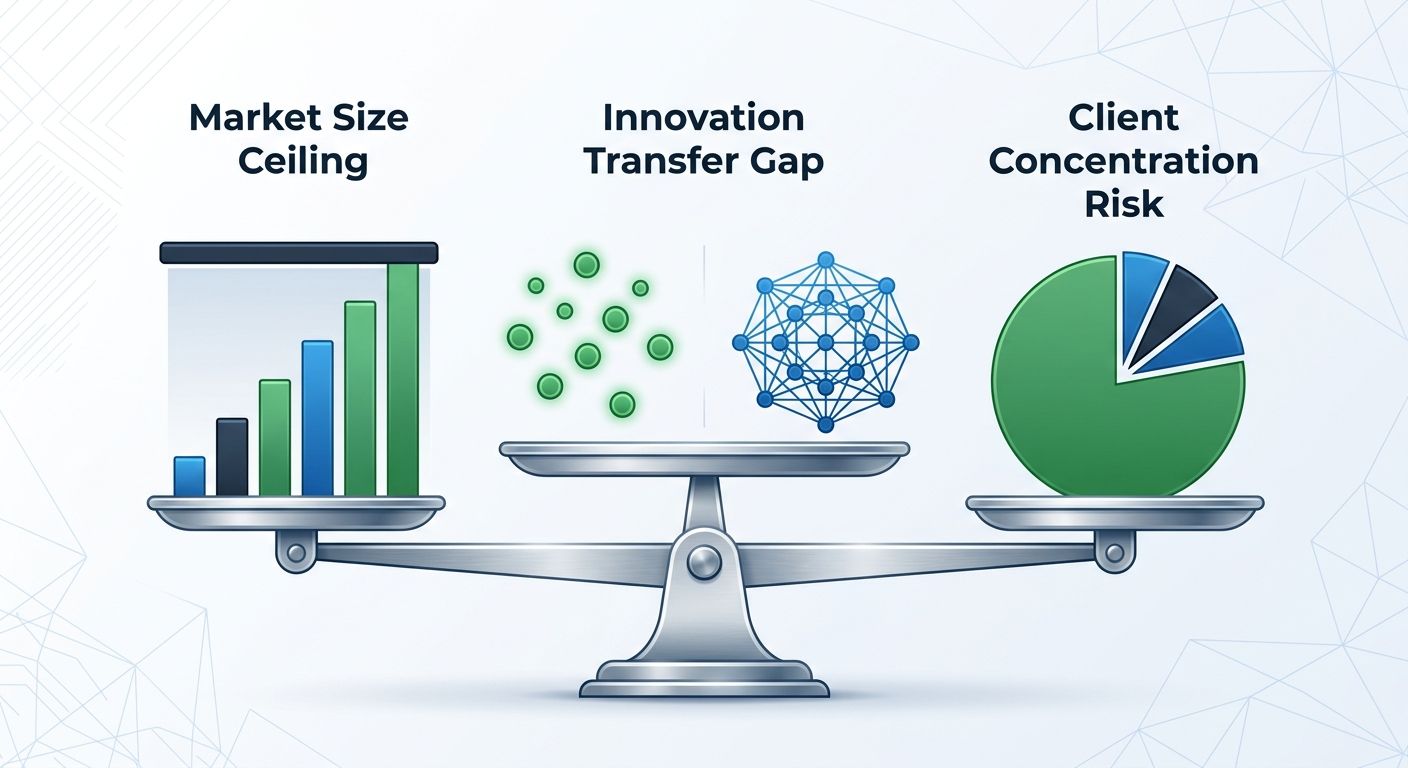
The most obvious constraint is market size. A dental SEO agency can only grow as fast as the dental industry produces new practices that need digital marketing. At some point, every viable dental practice in every metro area either has an agency or has decided they don't want one. The specialist then faces a choice: expand into adjacent verticals (orthodontics, oral surgery, cosmetic dentistry) or accept a natural ceiling on growth. Both options carry risk. Adjacent-vertical expansion dilutes the specialization advantage. Accepting the ceiling limits the agency's ability to invest in talent and tools.
The second limitation is innovation transfer. Generalist agencies sometimes stumble onto cross-industry insights precisely because they work across multiple verticals. An ecommerce conversion technique might apply beautifully to healthcare appointment booking. A B2B content strategy might translate to legal services lead generation. Specialists, by definition, have a narrower aperture for this kind of cross-pollination.
The third and most underappreciated limitation is client concentration risk. When your entire book of business is in behavioral health, a single regulatory change (say, new federal rules about telehealth advertising) can disrupt every client relationship simultaneously. Generalist agencies absorb sector-specific shocks more easily because their revenue is distributed across unrelated industries.
And then there's the AI variable. Generative search is evolving so quickly that today's vertical expertise could become less valuable if AI Overviews restructure how users find information in specific industries. An agency that built its entire model around "near me" dental searches faces a different world if Google's AI Mode starts answering "best dentist for Invisalign in [city]" directly, bypassing the local pack entirely.
The Tradeoffs Generalist Shops Face Right Now
If you're running a generalist SEO agency and reading this with a knot in your stomach, here's the honest assessment: the window for gradual transition is narrowing, but it hasn't closed.
The three launches from Firegang, A-Train, and GTECH represent a market signal. Generalist agencies with strong operational foundations can carve out vertical practices within their existing structure. The agencies I see doing this successfully usually start by picking one or two industries where they already have three to five clients, building out the pre-built knowledge assets (content templates, keyword universes, compliance checklists), and marketing that vertical practice as a distinct offering with its own case studies and landing pages.
What doesn't work is pretending the shift isn't happening and continuing to pitch the same "we do SEO for everyone" message to enterprise buyers. That positioning loses credibility a little more every quarter as vertical specialists accumulate case studies, proprietary datasets, and the kind of compliance fluency that enterprise procurement teams now screen for early in the evaluation process.
The vertical SEO specialization 2026 trend has structural roots in how search itself is changing. AI-driven search rewards entities with deep topical authority. Vertical agencies produce content, earn links, and build structured data within a single topical cluster year after year. Their domain expertise reads as authority to both traditional ranking systems and generative AI models. Generalist agencies spread that same effort across fifteen industries, and the authority signals dilute accordingly.
The agencies that survive the next two to three years of enterprise agency consolidation will be the ones that made a clear bet on where their depth lives. For some, that bet is an industry vertical. For others, it's a geographic and linguistic niche like GTECH's GCC focus. For a few, it might be a technical specialization like site migration or structured data architecture. The "we do everything for everyone" era is winding down, and these three April launches are the latest evidence that the market has already moved on.
Marcus Webb
Digital marketing consultant and agency review specialist. With 12 years in the SEO industry, Marcus has worked with agencies of all sizes and brings an insider perspective to agency evaluations and selection strategies.
Explore more topics