
Google AI Overviews Are Reshaping Local SEO: What Dental Clinics and Service Providers Need to Know Now
Google's AI Mode, its traditional local pack, and AI Overviews are now surfacing three different sets of businesses for the same local query. A documented test of "best fish tacos near me" returned entirely different business lists depending on which SERP feature the user engaged with.
 Marcus Webb··8 min read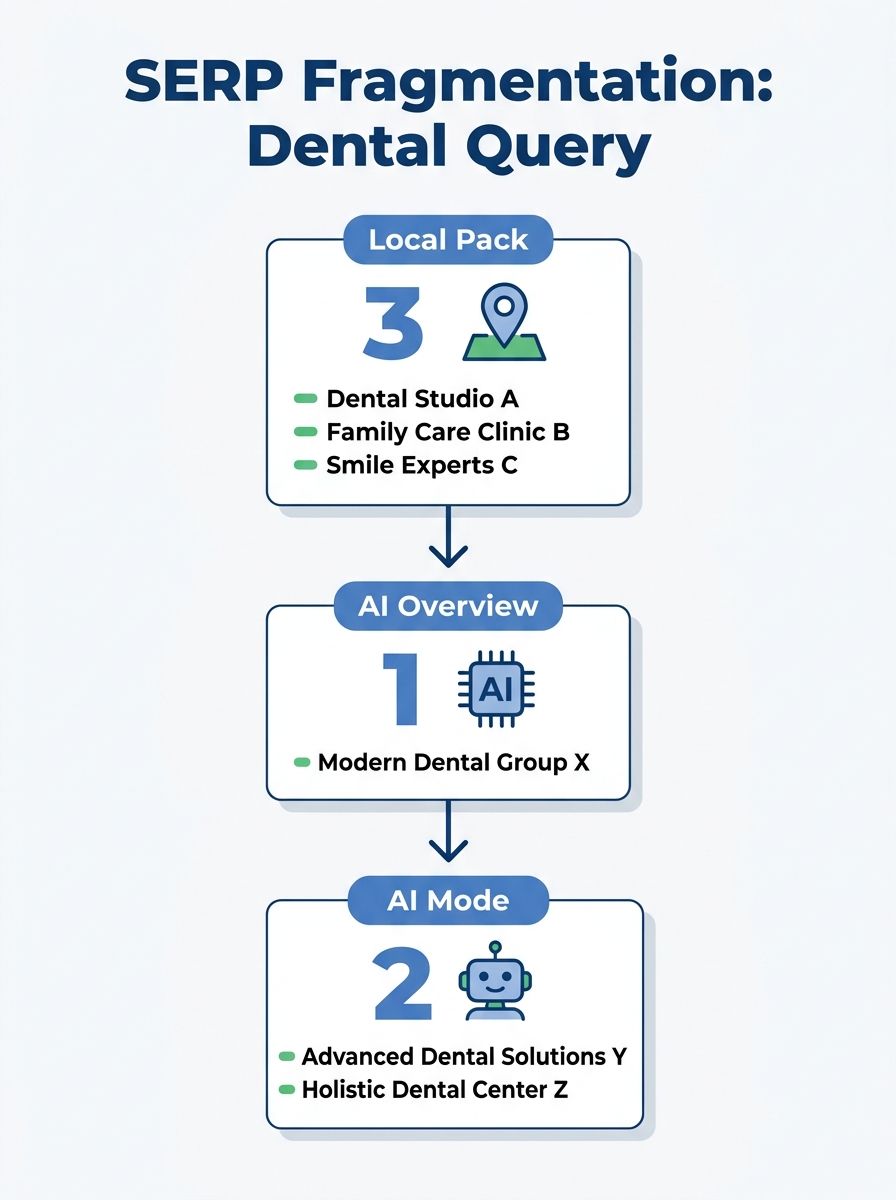
Google AI Overviews Are Fragmenting Local Search: A Dissection of What Dental Clinics and Service Providers Are Actually Losing
Google's AI Mode, its traditional local pack, and AI Overviews are now surfacing three different sets of businesses for the same local query. A documented test of "best fish tacos near me" returned entirely different business lists depending on which SERP feature the user engaged with. If you're running white-label local SEO campaigns for dental clinics or home service providers, you're probably still reporting on just one of those three surfaces. That's a problem, and it's getting worse by the week. Google's VP of Search, Liz Reid, confirmed just days ago that queries are growing longer and less keyword-driven, which means the fragmentation between these surfaces is going to accelerate, not stabilize.
I've spent the past six weeks auditing local SEO campaigns across four white-label partners who serve dental practices and HVAC contractors. The pattern is consistent: impressions are climbing, clicks are flat or declining, and nobody's dashboards are capturing what's actually happening. Here's the dissection.
Three SERPs, One Query, Three Different Winners
The core shift that makes Google AI Overviews local SEO reporting so unreliable is the fragmentation itself. When a potential patient searches "emergency dentist open Saturday," Google can now serve them results through at least three distinct mechanisms: the traditional local pack (the familiar map with three listings), an AI Overview summary at the top of the page, and AI Mode if the user opts in through Search Labs.
Each of these pulls from different ranking signals and returns different results. The local pack still relies heavily on Google Business Profile proximity and review signals. AI Overviews draw from the top 10 organic results, with 99.5% of cited sources coming from pages that already rank on page one. AI Mode, as documented by RankTracker's analysis, generates its own recommendations with AI-generated pricing summaries and reduced click-through.
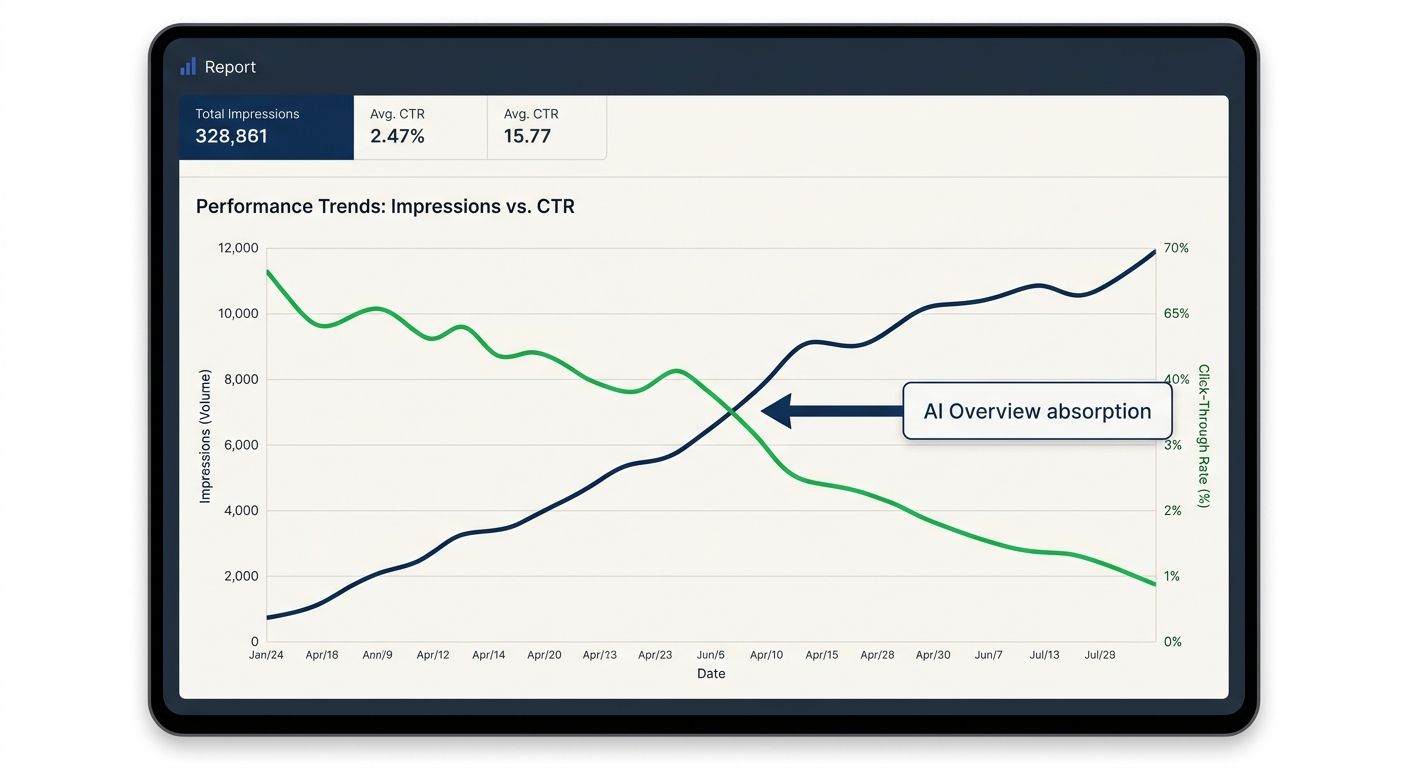
For white-label SEO providers, this means the rankings report you're sending to your agency partner's dental client might show position three in the local pack and position five organically, both perfectly healthy. But if an AI Overview is absorbing 67.5% of health-related informational queries and delivering the answer without a click, that "position five" is functionally invisible for a massive chunk of searches.
The distinction between informational and transactional dental queries matters enormously here. According to multiple tracking studies, 0% of "near me" healthcare provider queries currently trigger AI Overviews. Google tested them and pulled back. But informational queries like "how much do dental implants cost" or "is teeth whitening safe during pregnancy" are heavily affected. And those informational queries are exactly the top-of-funnel pages most dental SEO campaigns target for organic traffic.
The 99.5% Overlap That Masks a Deeper Problem
At first glance, the 99.5% statistic looks reassuring. If nearly all AI Overview citations come from the top 10 organic results, then ranking well organically should protect your client's dental clinic organic visibility, right?
Not exactly. The issue is what happens after the Overview appears. Wellows documented that AI Overviews often increase impressions while reducing clicks, a structural change that most reporting dashboards interpret as a performance failure rather than a SERP layout shift. I've seen this firsthand: a white-label partner serving a three-location dental group in Texas watched their client's impressions climb 34% over a quarter while click-through rate dropped by 19%. The agency's automated report flagged it as a CTR problem and recommended title tag optimization. The actual cause was AI Overviews absorbing the click for queries like "what to expect during a root canal" and "dental crown recovery time."
This is where the white-label reporting gap becomes a client retention problem. If your agency partner can't explain why impressions are up and clicks are down, the dental practice owner assumes the SEO isn't working and starts shopping for a new agency. I've reviewed agency churn data from two white-label providers, and healthcare practices had the highest cancellation rate of any vertical in Q1 2026. The common thread in exit interviews was "we're not seeing results," even when the underlying organic positions were stable or improving.
Google's own documentation acknowledges this dynamic but frames it positively. Their Search Central docs state that clicks from AI Overview results are higher quality, meaning users who do click through spend more time on the site. That's true, but it doesn't help when your reporting template only shows click volume, not engagement depth.
When Google's AI Calls the Front Desk
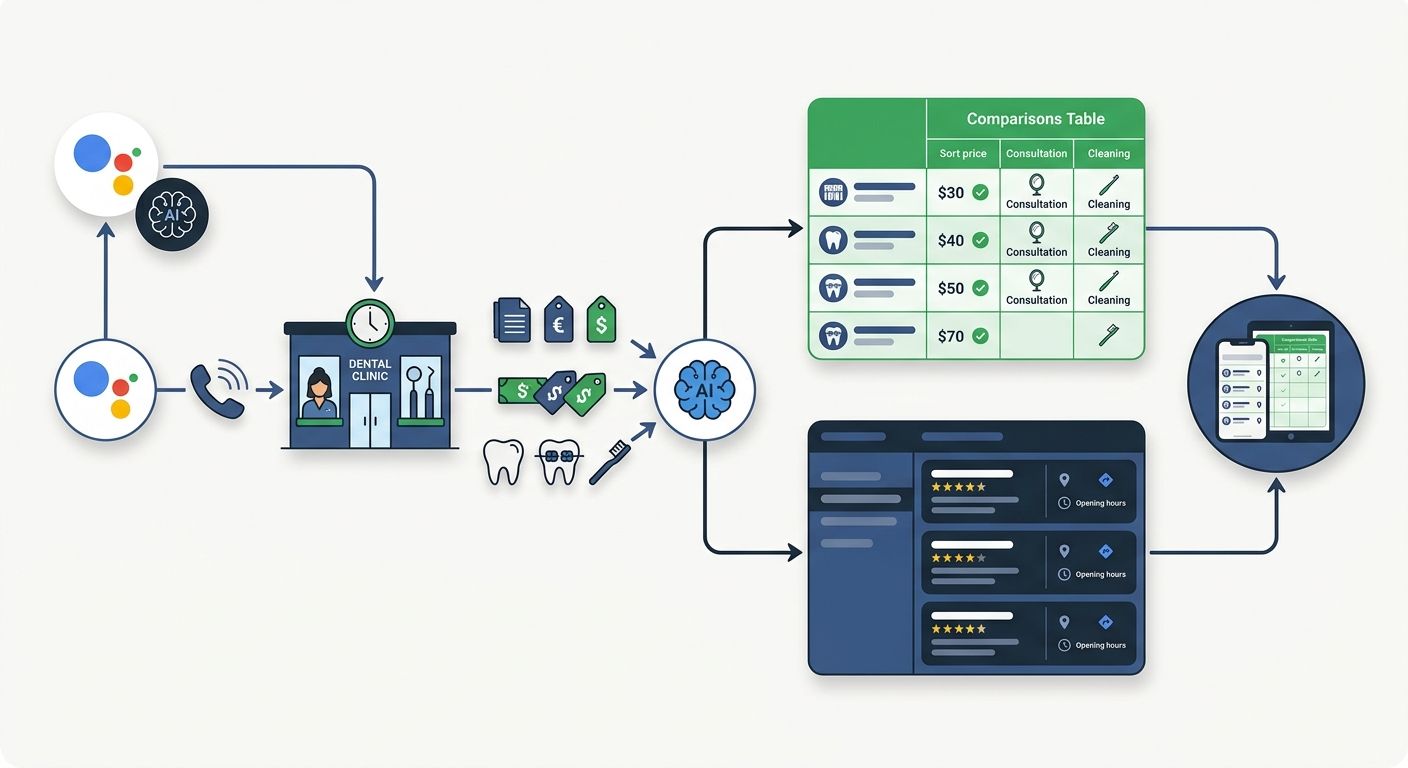
The most dramatic development in the AI search local strategy space this year is Google's AI making actual phone calls to local businesses. Forward First Media documented how Google's AI can now interact directly with businesses, placing phone calls on behalf of users to gather pricing, availability, and service details. It then delivers a ranked comparison back to the searcher.
For dental clinics, this changes the optimization equation entirely. Your client's front desk staff is now an SEO variable. If the receptionist who answers Google's AI call provides unclear pricing or puts the AI on hold, that data feeds back into the comparison the searcher sees. The practices that train their staff to handle these inquiries clearly and quickly will have an advantage that no amount of on-page optimization can replicate.
This is a conversation I've started having with white-label partners, and most of them aren't equipped for it. White-label SEO has traditionally been a digital-only service: technical audits, content production, link building, GBP optimization. Advising a client on how their phone staff should interact with an AI caller crosses into operations consulting, which most white-label agreements don't cover. But if you don't address it, the competitor across town who answers the AI call cleanly will outperform your client in the comparison summary.
The parallel development in home services is even more advanced. HVAC contractors and plumbers are already seeing AI-generated pricing summaries appear in search results, pulled from these automated calls. Dental practices are next. When "how much does a dental crown cost in Phoenix" starts returning a real-time price comparison generated from AI phone calls, the practice that publishes transparent pricing on its website and confirms it verbally will dominate that SERP feature.
If you've been following the shifts affecting local contractors, the pattern is the same: smaller sites with focused, trustworthy content can rank in AI Overviews, but the definition of "content" now extends beyond the website.
Reporting Gaps That White-Label Providers Can't Paper Over
I want to be direct with white-label agencies here, because this is where I've seen the most avoidance. Google Search Console and Google Analytics still don't provide native tracking for AI Overview citations or AI Mode appearances. The tools that are starting to offer this capability, such as BrightEdge and SearchAtlas, are priced at enterprise tiers that most white-label providers and their small-business clients can't justify.
So what's actually measurable right now? Three things:
Branded search volume trends. If your dental client's branded searches are growing while non-branded clicks decline, that's a sign AI Overviews are handling the non-branded informational queries but the practice's reputation is driving direct searches. This is a positive signal you should be reporting on.
Phone call tracking from GBP. Google Business Profile still reports call volume, direction requests, and website clicks. If GBP-driven calls are steady or growing while organic website traffic dips, your client is probably benefiting from the local pack's continued dominance in high-intent "near me" queries even as AI Overviews absorb informational traffic.
Review velocity and content quality. The Local Falcon whitepaper found that service businesses consumers typically research before purchasing are most affected by AI Overviews. Dental practices fall squarely into this category. Reviews that mention specific services and locations are becoming ranking signals for both traditional and AI-generated results, a point I've covered when discussing how review signals feed into search rankings.
The pricing conversation matters too. Most white-label local SEO packages for dental practices run between $300 and $800 per month at the wholesale level. That pricing was built around a playbook of GBP optimization, citation building, review generation, and monthly content. Adding AI Overview monitoring, staff training guidance on AI caller interactions, and multi-surface SERP tracking requires either higher pricing or a restructured scope. White-label providers who pretend the old package still covers the new reality are going to face agency churn when their partners' clients don't see results.
This connects to a broader challenge in how agencies select and evaluate partners. As we've explored when examining why performance metrics alone don't predict SEO success, the gap between what's measurable and what's meaningful keeps widening. AI Overviews have made that gap a canyon.
The Dual-Track Campaign Architecture That April's Data Demands
Here's where I'll lay out what's actually working, based on campaigns I've audited across white-label providers in the dental and home services verticals since the start of 2026.
The practices seeing stable or growing patient acquisition are running what amounts to two parallel strategies without necessarily labeling them that way. The first track is traditional local SEO fundamentals: GBP optimization, consistent NAP citations, review generation, and location-specific service pages. This track protects the local pack position, which still drives the majority of high-intent service provider ranking changes and appointment bookings. Google has shown no indication of replacing the local pack with AI Overviews for transactional healthcare queries.
The second track targets AI extractability. This means producing content that answers specific patient questions with enough depth and structured data that Google's AI can cite it in Overviews. The content needs to come from identifiable practitioners with verifiable credentials, since E-E-A-T signals are weighted heavily in health-related AI Overview sourcing. A blog post about dental implant recovery written by "Staff Writer" won't get cited. The same post attributed to "Dr. Sarah Chen, DDS, 15 years of implant experience" with a linked author bio and practice credentials page has a realistic shot.
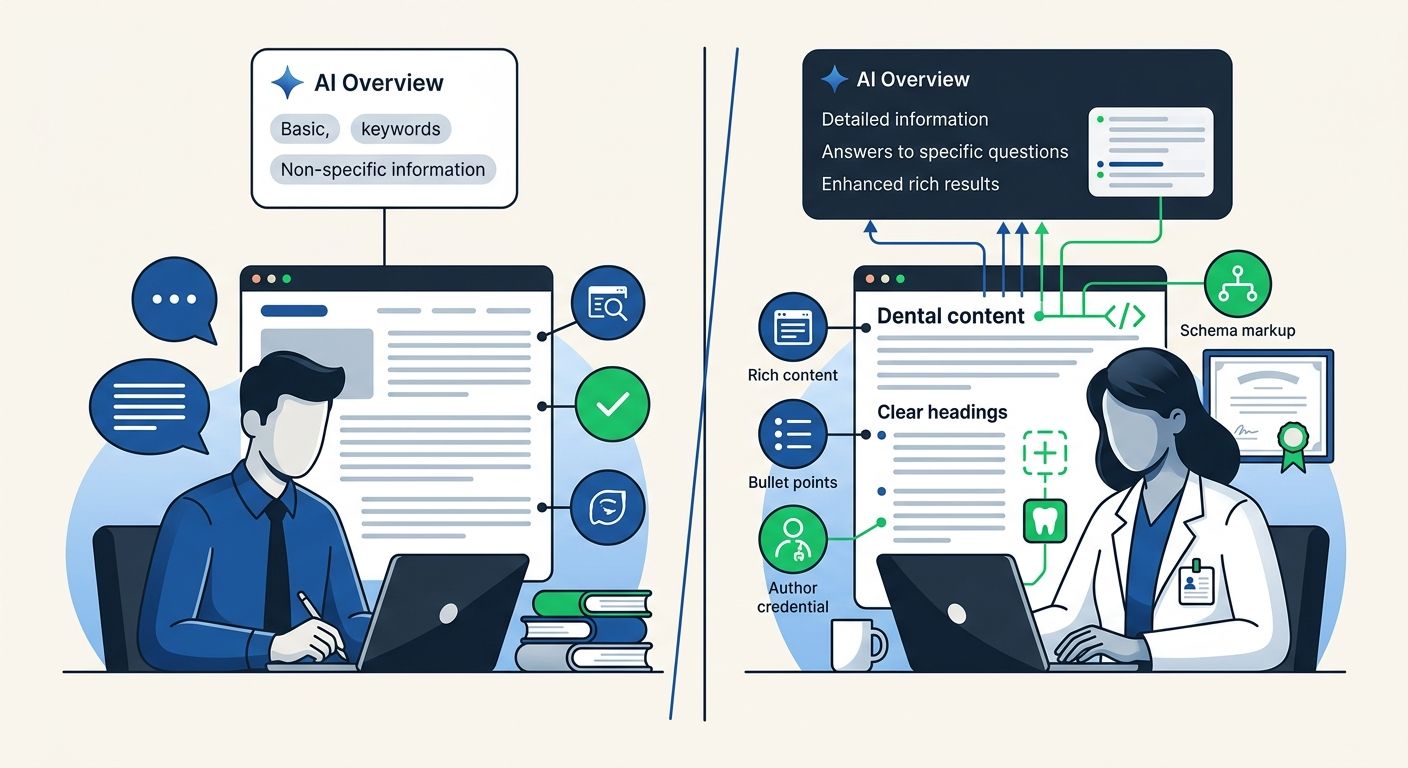
The white-label operational challenge is real. Most white-label content production workflows weren't designed to collect practitioner credentials, draft content under a named dentist's byline, or build the author entity signals that AI Overviews reward. Building that workflow adds cost and complexity, but the alternative is producing content that performs well in traditional organic rankings while remaining invisible to AI-generated results.
For agencies evaluating their white-label partnerships, the questions to ask right now are specific. Does your white-label provider track AI Overview citation rates for your clients' target queries? Can they produce content attributed to your client's practitioners with proper schema markup? Do they have a process for monitoring whether GBP-driven calls are compensating for organic click declines? If the answer to all three is no, you're paying for a 2024 service in a 2026 search environment.
The AI traffic increase of 527% between January 2024 and May 2025 across tracked websites isn't slowing down. Understanding how AI search disrupts traditional local benchmarks is no longer an academic exercise for agencies serving dental practices and service providers. It's the difference between retaining clients through a confusing transition and watching them walk to an agency that can explain what's happening.
The white-label providers who update their reporting, expand their scope, and price accordingly will hold their agency partnerships. The ones who keep sending the same ranking reports with the same metrics will lose partners who can't explain the results to their clients. The market is sorting itself right now, and the sorting criterion is whether you can account for a SERP that no longer has a single answer to any given query.
Marcus Webb
Digital marketing consultant and agency review specialist. With 12 years in the SEO industry, Marcus has worked with agencies of all sizes and brings an insider perspective to agency evaluations and selection strategies.
Explore more topics