
Why Enterprise SEO Agencies Are Expanding Into AI-Driven Markets: What the San Francisco Shift Reveals About 2026 Competition
SEO.co announced its physical expansion into San Francisco on May 7, targeting venture-backed startups and enterprise brands with GEO consulting, AI-driven search strategies, and technical audits designed for generative platforms.
 Marcus Webb··8 min read
Why Enterprise SEO Agencies Are Expanding Into AI-Driven Markets: What the San Francisco Shift Reveals About 2026 Competition
SEO.co announced its physical expansion into San Francisco on May 7, targeting venture-backed startups and enterprise brands with GEO consulting, AI-driven search strategies, and technical audits designed for generative platforms. The move is one data point in a broader pattern: enterprise agencies are planting flags in tech-dense metros and building entire service lines around visibility in AI-generated answers. According to McKinsey's AI Discovery Survey, 44 percent of AI-powered search users now call it their primary source of insight, ahead of traditional search at 31 percent and retailer websites at 9 percent.
Those numbers explain the urgency behind this enterprise SEO expansion. But urgency without structure leads to expensive mistakes. I've reviewed agency contracts and service proposals for over twelve years. The agencies getting this shift right follow a handful of principles. The ones getting it wrong are repackaging old services under new labels, hoping nobody reads the fine print.
Here are the rules I'd apply when evaluating any enterprise agency competing in AI-driven markets right now, along with the conditions under which each rule stops being useful.
Track AI citation share before you optimize for rankings
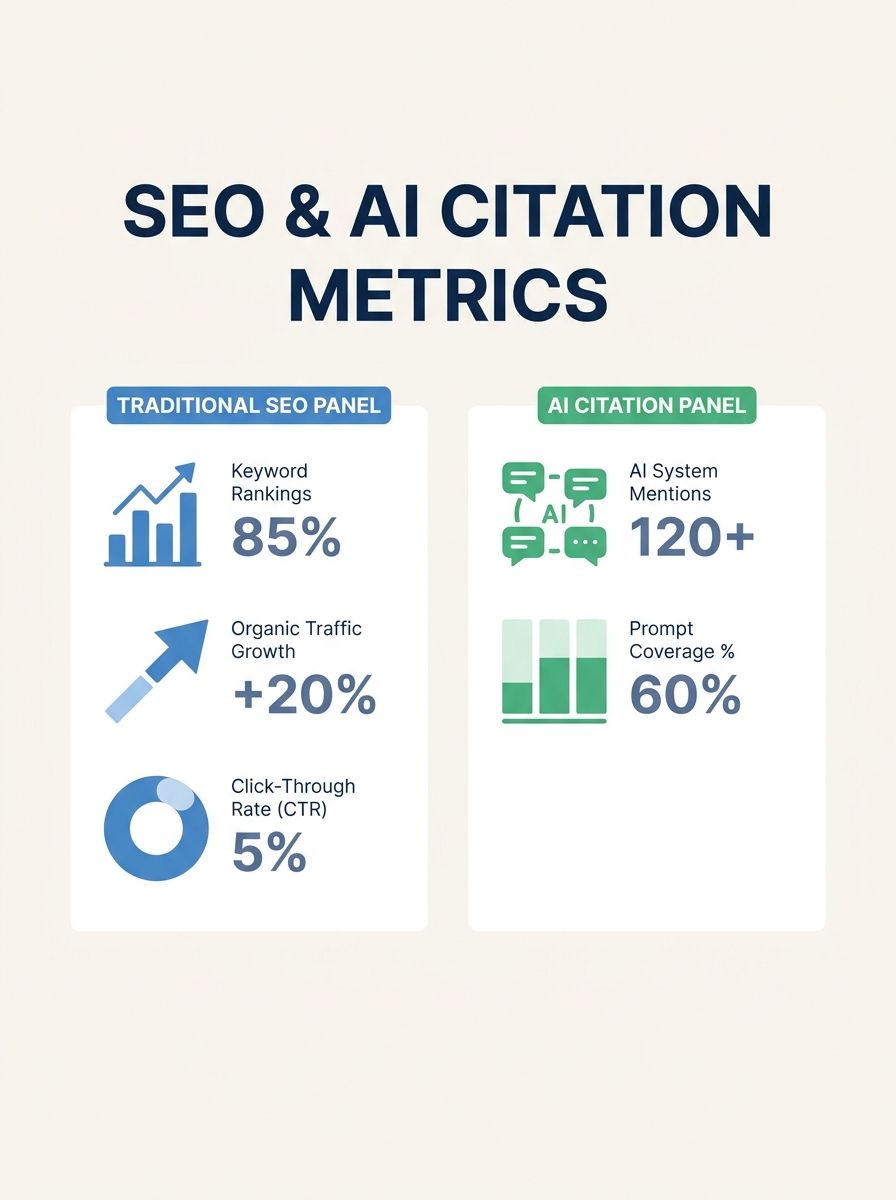
The traditional KPI dashboard still matters: keyword positions, organic sessions, click-through rate. But for enterprise brands competing in categories where AI Overviews, ChatGPT, and Perplexity surface answers before users see a blue link, citation share is becoming the metric that predicts future traffic.
Citation share means tracking how often your brand, your content, and your data get referenced in AI-generated answers across multiple platforms. Tools for this are still maturing. Conductor has added SearchGPT-related tracking to its enterprise platform, and smaller agencies are building custom scrapers. Either way, you need a baseline measurement before you can claim progress.
The rule applies most urgently in SaaS, finance, legal, and healthcare. These are the exact verticals where SEO.co's San Francisco expansion is focused, and they're the categories where AI-mediated discovery is replacing traditional click-through behavior fastest. If your agency can't show you citation data across at least Google AI Overviews and one LLM interface, they're operating on outdated instrumentation.
When the rule breaks: If your business runs on purely local, intent-driven queries (plumbers, emergency HVAC, restaurants), traditional ranking metrics still dominate. AI citations matter less when the user's next action is a phone call rather than a research session.
Pick a vertical before you pick a metro market
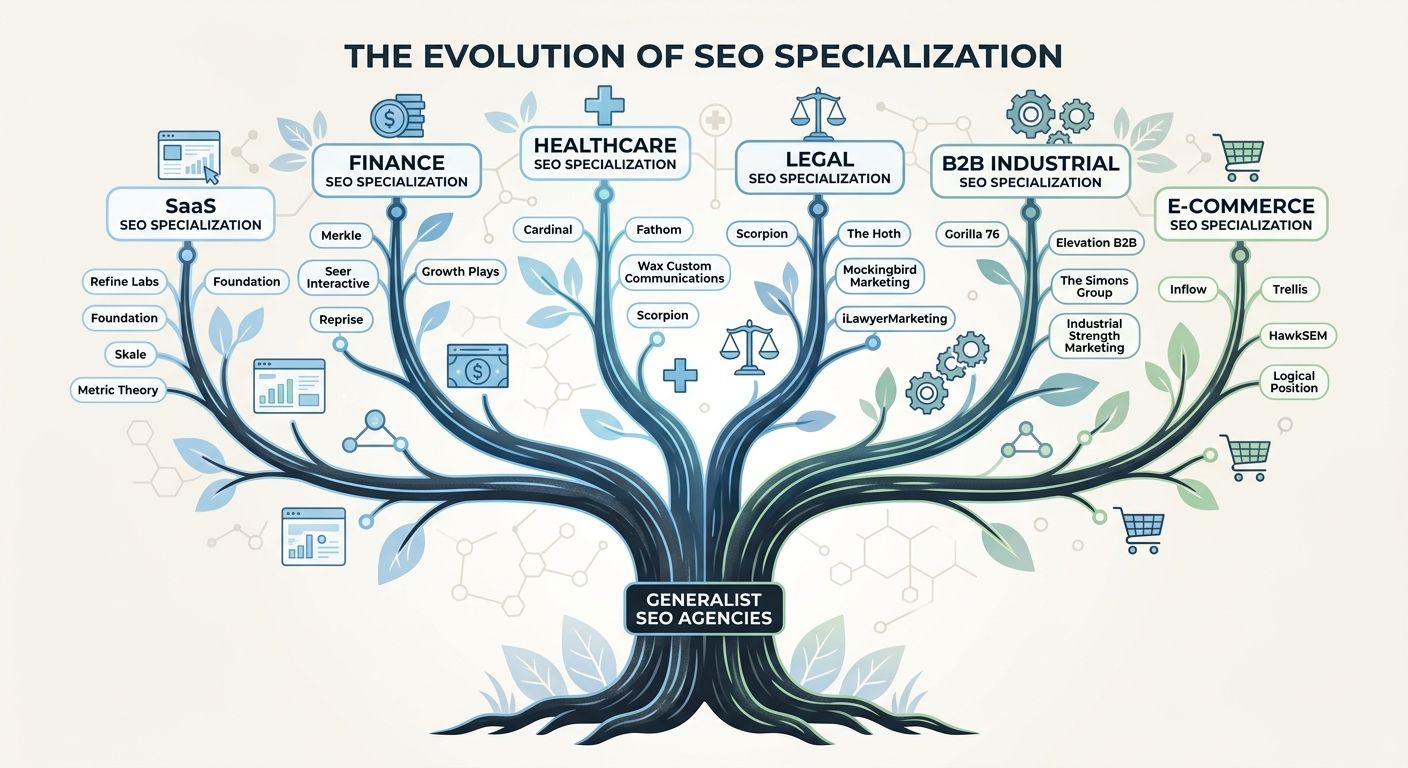
SEO.co's move into San Francisco is geographic. But the more telling trend across the industry is vertical specialization 2026: agencies choosing to own a specific industry rather than a specific city.
Go Fish Digital, for example, works with B2B and enterprise brands across SaaS, finance, legal, and marketplaces, serving clients like LegalZoom, MoneyGeek, and Uber. Seer Interactive focuses on large and mid-market brands with integrated search, analytics, and AI visibility strategies. The pattern is consistent: agencies winning enterprise contracts are the ones that understand their client's industry deeply enough to speak the language of their buyers.
This tracks with what's happening in vertical SaaS more broadly. As CIO reported, horizontal platforms required endless customization to handle industry-specific workflows, and customers often paid more for consultants than for the software itself. The same dynamic plays out in SEO services. A generalist agency that has to learn your industry's terminology, compliance requirements, and buyer journey from scratch is burning your retainer on their own education.
If you're evaluating SEO companies for SaaS and tech, look for agencies that already have case studies in your specific sub-vertical. An agency that's optimized for project management SaaS has different expertise than one focused on healthcare SaaS, even though both technically fall under the same umbrella.
When the rule breaks: If your business genuinely operates across multiple verticals with distinct buyer personas, you may need a larger agency with dedicated vertical teams rather than a single specialist shop. The cost-per-vertical math changes once you're managing four or more distinct audience segments.
Measure assisted revenue instead of click volume
Enterprise SEO agencies that still report exclusively on organic traffic and keyword rankings are measuring an increasingly incomplete picture. AI Overviews and generative search interfaces often answer user questions without producing a click. The user still learned about your brand. They still moved through the funnel. But your analytics dashboard registered nothing.
The shift toward measuring assisted revenue is one of the defining enterprise SEO trends this year. LSEO noted that enterprise SEO now sits at the intersection of traditional search, AI-generated discovery, first-party analytics, and brand authority. If your measurement model doesn't account for that intersection, your ROI calculations are wrong.
Practically, this means asking your agency how they attribute value to brand mentions in AI answers, to visibility in ChatGPT recommendations, and to top-of-funnel awareness that eventually converts through branded search or direct visits. Agencies that have built attribution models for this are ahead of the curve. Agencies that shrug and point to GA4 dashboards are behind it.
I've seen contract proposals this year that still define success as "page one rankings for 50 target keywords." That metric is familiar and comfortable. It's also fading in relevance for enterprise clients whose buyers increasingly discover brands through AI-mediated research before they ever type a branded query.
When the rule breaks: Assisted revenue modeling requires enough conversion volume to build meaningful attribution. If you're a pre-revenue startup or a brand with fewer than 100 conversions per month, the data won't be statistically reliable enough to act on. Stick with directional metrics until your sample size supports the model.
Treat generative engine optimization as a parallel discipline
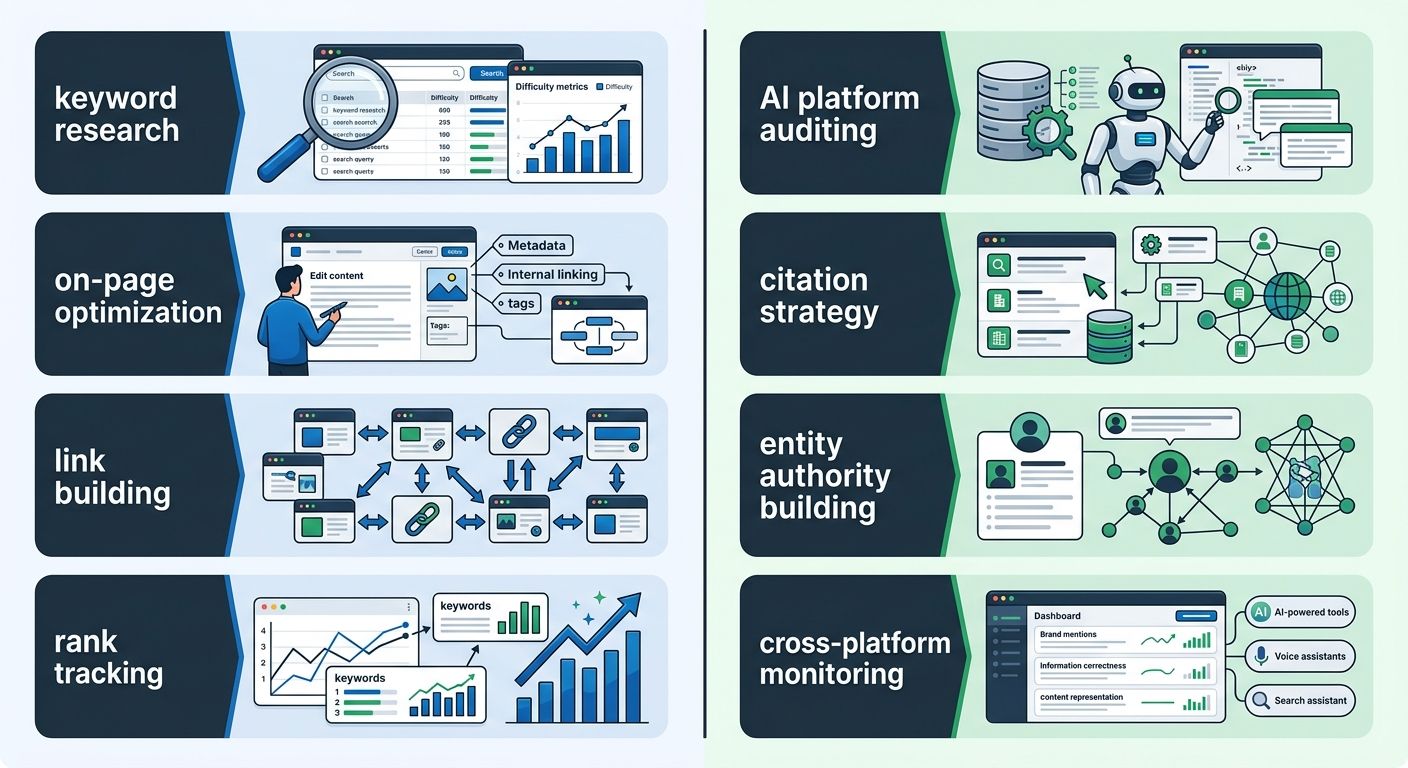
GEO is a real discipline with its own techniques, metrics, and strategic requirements. The agencies that treat it as a bolt-on to existing SEO services produce mediocre results for both.
Direct Agents reported that companies mastering AI search optimization are capturing disproportionate market share, with some seeing traffic increases above 2,300 percent from AI-driven channels. Those gains don't come from tweaking title tags. They come from building content specifically designed to be cited, structuring authority signals that AI systems trust, and maintaining consistent presence across the fragmented landscape of generative search platforms.
The generalist-versus-specialist split is accelerating here. We've covered how AI-driven search is fragmenting the SEO agency market, and GEO is one of the clearest fault lines. An agency that positions GEO as a separate service line with dedicated strategists is signaling that they take it seriously. An agency that mentions GEO in a sales deck and then assigns it to the same team running your traditional campaigns probably doesn't have the depth you need.
For B2B SEO agencies, this distinction carries particular weight. B2B buyers increasingly use AI tools to research vendors, compare solutions, and build shortlists before they ever fill out a demo request form. If your brand doesn't appear in those AI-generated comparisons, you're invisible during the most critical phase of the buying process.
When the rule breaks: Some industries haven't seen meaningful AI search adoption among their buyers yet. If your target audience is purchasing managers at manufacturing plants who still rely on trade directories and industry conferences, a dedicated GEO practice may be premature. Check your own analytics for AI-referred traffic before investing in a separate discipline.
Don't confuse geographic presence with geographic authority
SEO.co's expansion into San Francisco is a physical presence play. The press coverage emphasized that the city has high concentrations of technology, finance, healthcare, legal, and industrial companies. True. But opening an office in a market doesn't automatically mean you understand that market's competitive dynamics.
Enterprise brands evaluating agencies based on geographic footprint should dig deeper. How many clients in your specific industry has the agency served in that metro? What measurable results can they show? As this site has explored in how SEO agencies should pivot toward authority rather than rankings, an agency's credibility in a market comes from demonstrated expertise and verifiable outcomes, not a mailing address.
SEO.co's CRO Timothy Carter acknowledged this dynamic directly, stating that San Francisco is "one of the most sophisticated digital markets in the world" and that brands need visibility across Google rankings, AI-generated answers, conversational search, and emerging discovery platforms. The breadth of that claim is worth testing against specific deliverables. I'd want to see exactly which AI platforms they're optimizing for, what citation tracking they provide, and how they define success metrics for each channel before signing any contract.
When the rule breaks: There are genuine advantages to local presence for agencies serving geographically concentrated industries. If your buyers, industry events, and competitive landscape are all concentrated in one metro, an agency with local relationships and market knowledge has real structural advantages that remote agencies can't replicate.
Demand platform-specific structured data audits
Structured data has been an SEO best practice for years. What's changed is that different AI platforms parse and prioritize structured data differently. Google's AI Overviews pull from schema markup, Knowledge Graph data, and page-level signals in one configuration. ChatGPT and Perplexity rely on different crawling patterns and trust signals entirely.
Enterprise brands need platform-specific audits, not a single schema checklist. Does your FAQ schema surface correctly in Google AI Overviews? Does your product schema appear when ChatGPT recommends alternatives in your category? Does your organizational schema give Perplexity enough entity clarity to cite you by name?
The agencies doing this well are running separate audit workflows for each major platform. The agencies doing it poorly treat structured data as a technical checkbox rather than a strategic asset that requires ongoing maintenance as platform requirements evolve.
When the rule breaks: For straightforward local businesses with simple service offerings, a single well-implemented structured data setup is probably sufficient. Platform-specific audits become critical when your brand competes in informational and comparison queries where AI systems generate synthesized answers.
When These Rules Shift
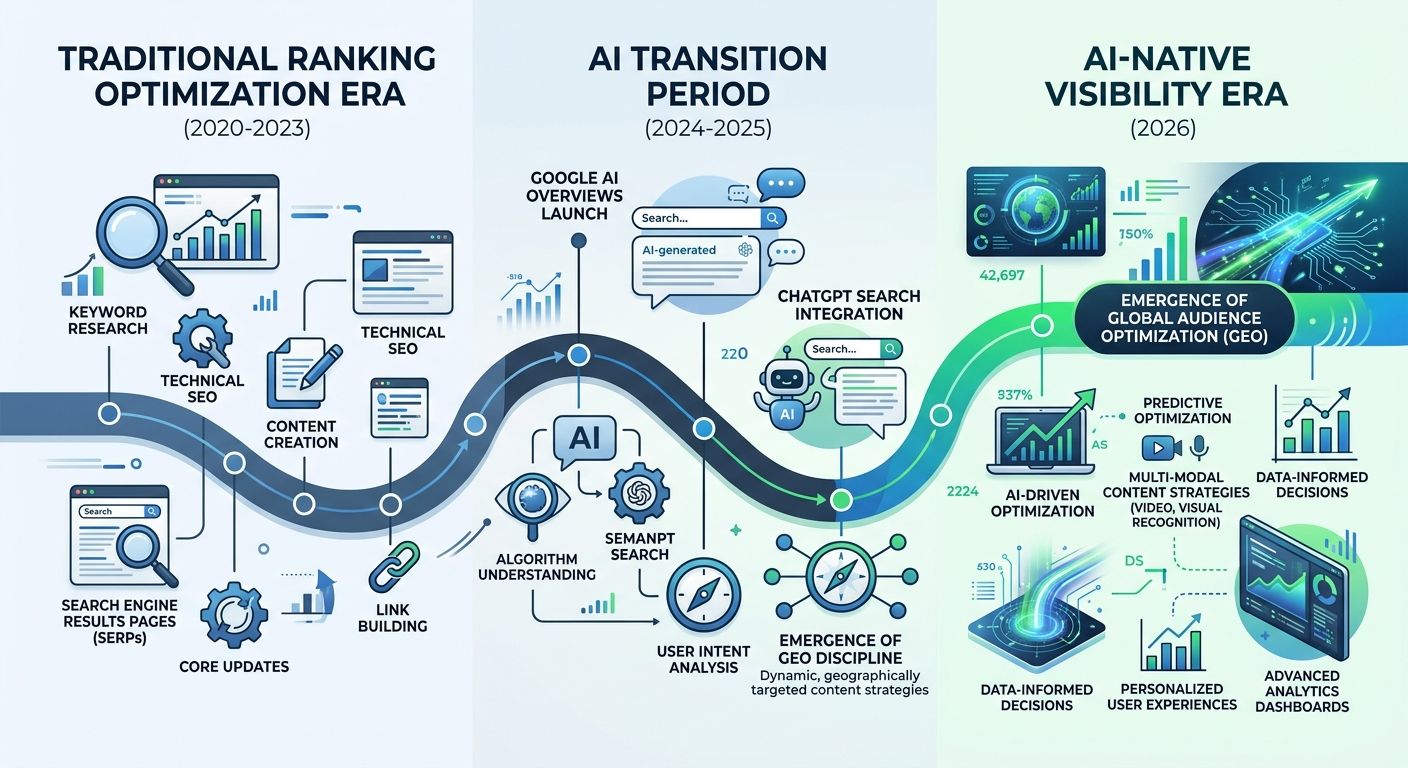
Every rule on this list has a shelf life. AI search platforms are evolving on quarterly cycles. Google's AI Overviews are adding new citation formats. ChatGPT's search capabilities keep expanding. New entrants like Perplexity are carving out market share in specific query categories.
The rule about tracking AI citation share, for example, depends on the availability of reliable tracking tools. If the major enterprise platforms ship cross-platform citation dashboards in the next six months, agencies that built custom tracking solutions will lose their early-mover advantage. That's fine. The point was never to build proprietary tech for its own sake. The point was to measure what matters before the rest of the industry agreed on what to measure.
Similarly, the vertical specialization trend could reverse if a dominant AI search platform emerges with standardized optimization requirements that apply equally across industries. So far, the fragmentation favors specialists. Platform consolidation could change that math quickly.
The San Francisco expansion by SEO.co is significant because of what it represents about where agency investment dollars are flowing. Enterprise SEO expansion into AI-driven markets is the dominant competitive story of this year. The agencies and brands that are building measurement discipline, vertical expertise, and AI-native visibility strategies right now are creating advantages that compound monthly. The longer you wait for the landscape to stabilize before acting, the further ahead your competitors get by treating the instability as an opportunity.
Marcus Webb
Digital marketing consultant and agency review specialist. With 12 years in the SEO industry, Marcus has worked with agencies of all sizes and brings an insider perspective to agency evaluations and selection strategies.
Related Articles
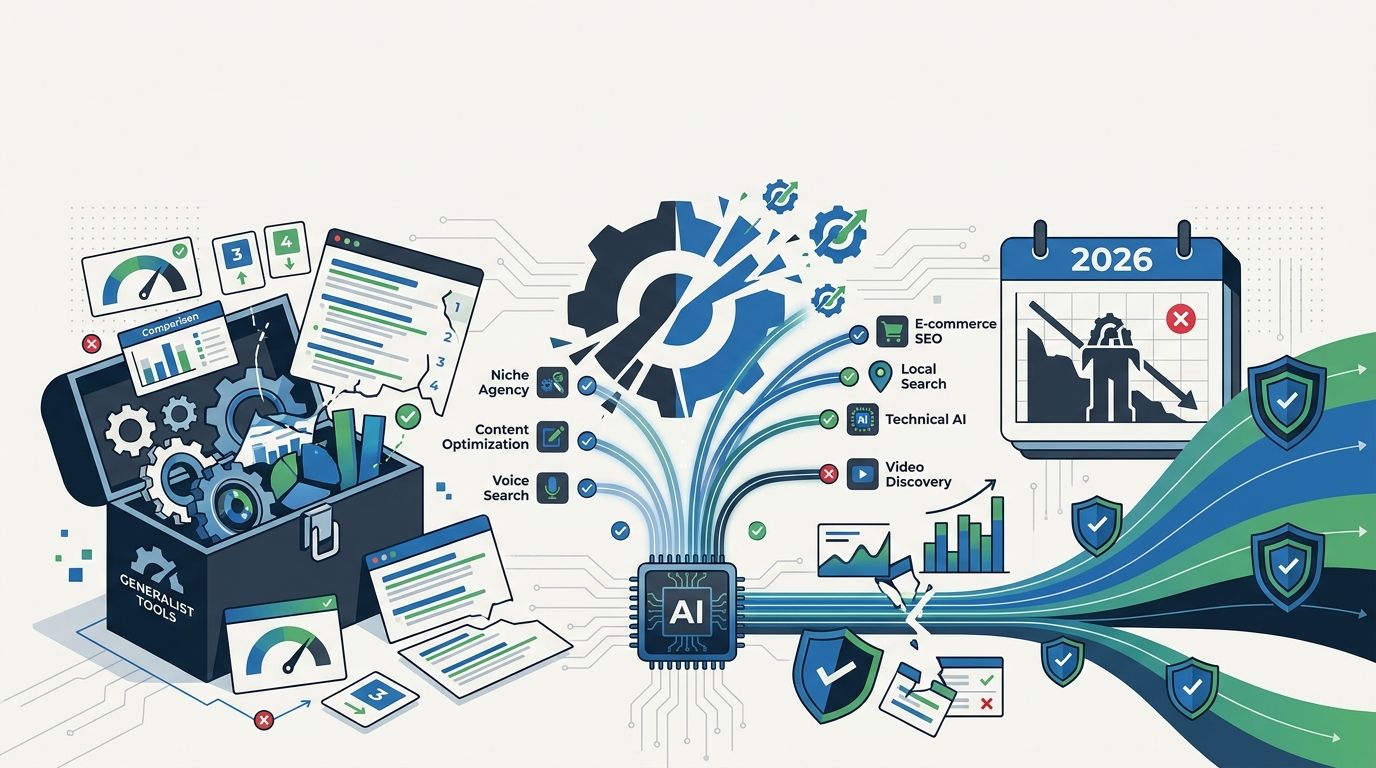
How AI-Driven Search is Fragmenting the SEO Agency Market: Why Your Generalist Agency May Not Survive 2026
Forty-one white-label SEO contracts have crossed my desk for review since Google expanded AI Overviews to cover more than 40% of commercial queries in Q3 2025. Thirty of those contracts still listed "keyword ranking improvements" as the primary deliverable.
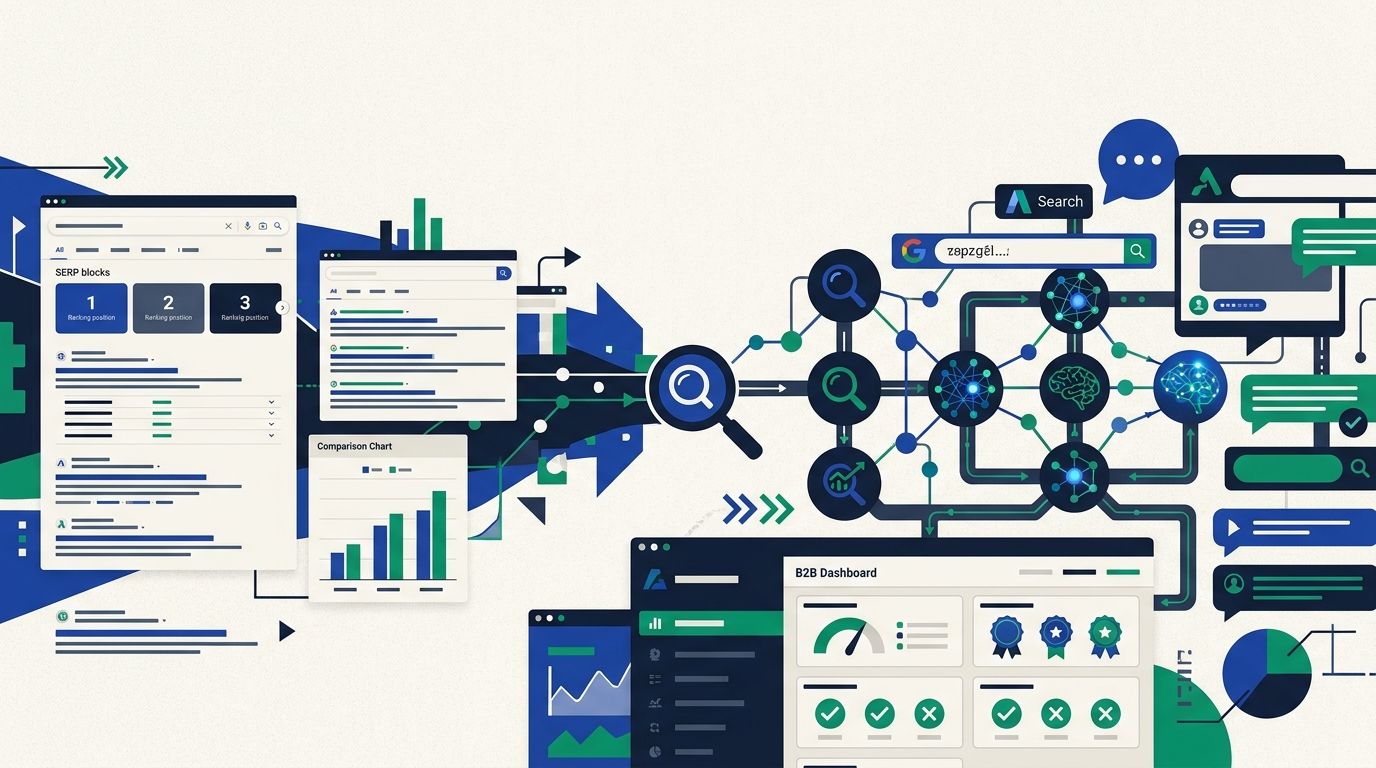
From Google Search to AI Assistants: How B2B Agencies Must Rebuild SEO Strategy Beyond Traditional SERP Rankings
Three of the five B2B agency contracts sitting on my desk right now define success exclusively as Google organic ranking improvements and click-through traffic growth. The agencies that wrote those contracts aren't incompetent.

Enterprise B2B SEO Leaders Now Differentiated by AI-Answer Optimization and Governance Systems
Governance systems, large-site technical execution, and the ability to convert existing authority into AI-answer citations now separate enterprise B2B SEO category leaders from agencies that simply serve large clients, according to advisory guidance NEWMEDIA.COM released July 4 analyzing what define
Explore more topics