
Framework Separates Search Optimization Into Three Distinct Disciplines for AI-Driven Search Era
A taxonomy published May 2 separates modern search optimization into three distinct disciplines—traditional SEO for rankings, Answer Engine Optimization for featured snippets, and Generative Engine Optimization for AI citation placement—according to a framework from memorable.design.
 Marcus Webb··3 min read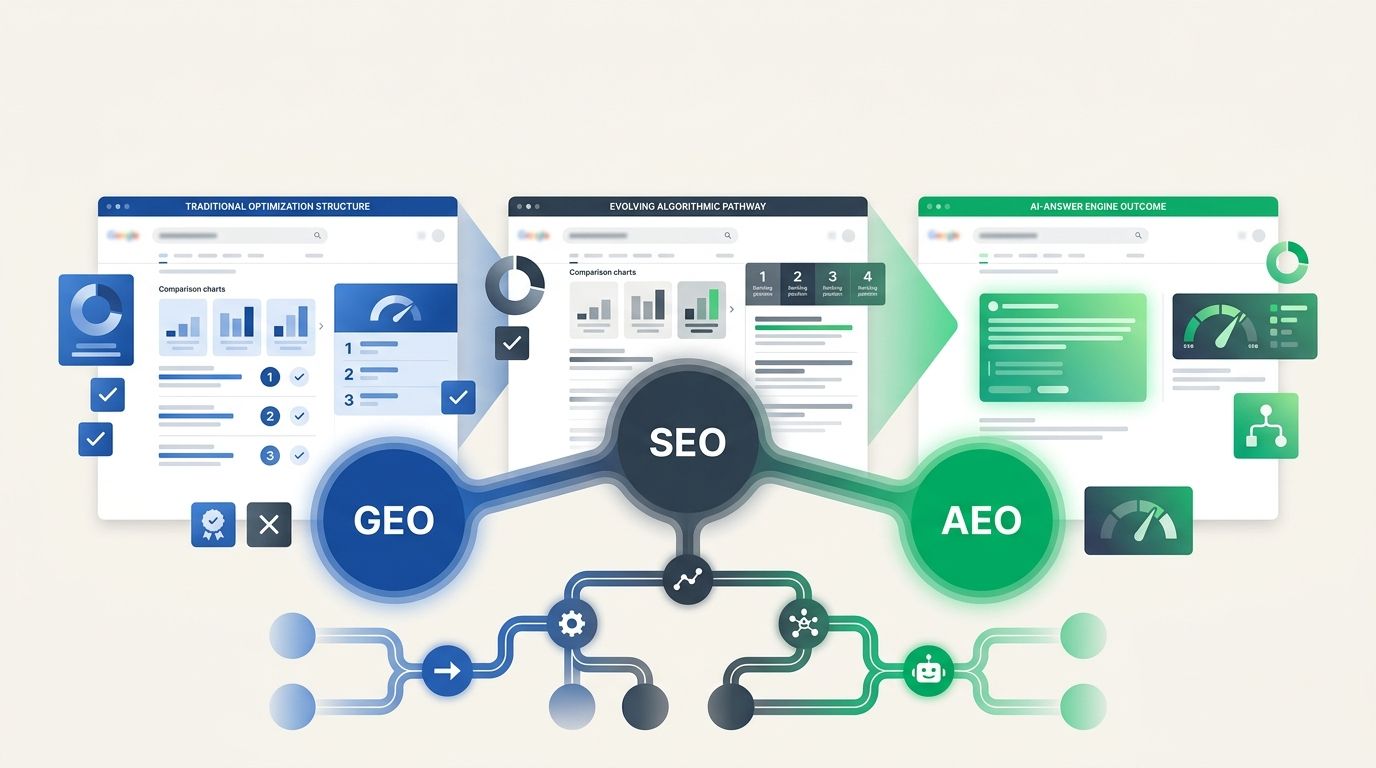
Framework Separates Search Optimization Into Three Distinct Disciplines for AI-Driven Search Era
A taxonomy published May 2 separates modern search optimization into three distinct disciplines—traditional SEO for rankings, Answer Engine Optimization for featured snippets, and Generative Engine Optimization for AI citation placement—according to a framework from memorable.design.
Digital marketing strategist Ruslan Smirnov authored the guide, which frames the shift from "ranking pages to winning citations" as the fundamental change in search visibility strategy for 2026. The framework positions SEO as optimizing for discovery, AEO for precision, and GEO for influence within generative AI responses.
The taxonomy arrives as AI-powered search tools including ChatGPT, Google's Search Generative Experience, and Perplexity reshape how users consume search results. Rather than treating these as variants of a single optimization practice, the framework argues each requires separate technical approaches and content structures.
Three Optimization Targets With Separate Success Metrics
Traditional SEO measures success through page-one rankings and click-through rates, according to the framework. Content typically runs 1,500-plus words, focuses on keyword placement and backlink acquisition, and aims to keep users on the page through comprehensive coverage.
Answer Engine Optimization targets featured snippets and voice assistant responses with 50-to-100-word answers formatted as lists, tables, or direct responses to specific questions, the guide states. Schema markup and question-and-answer structure replace traditional keyword density as the primary technical focus.
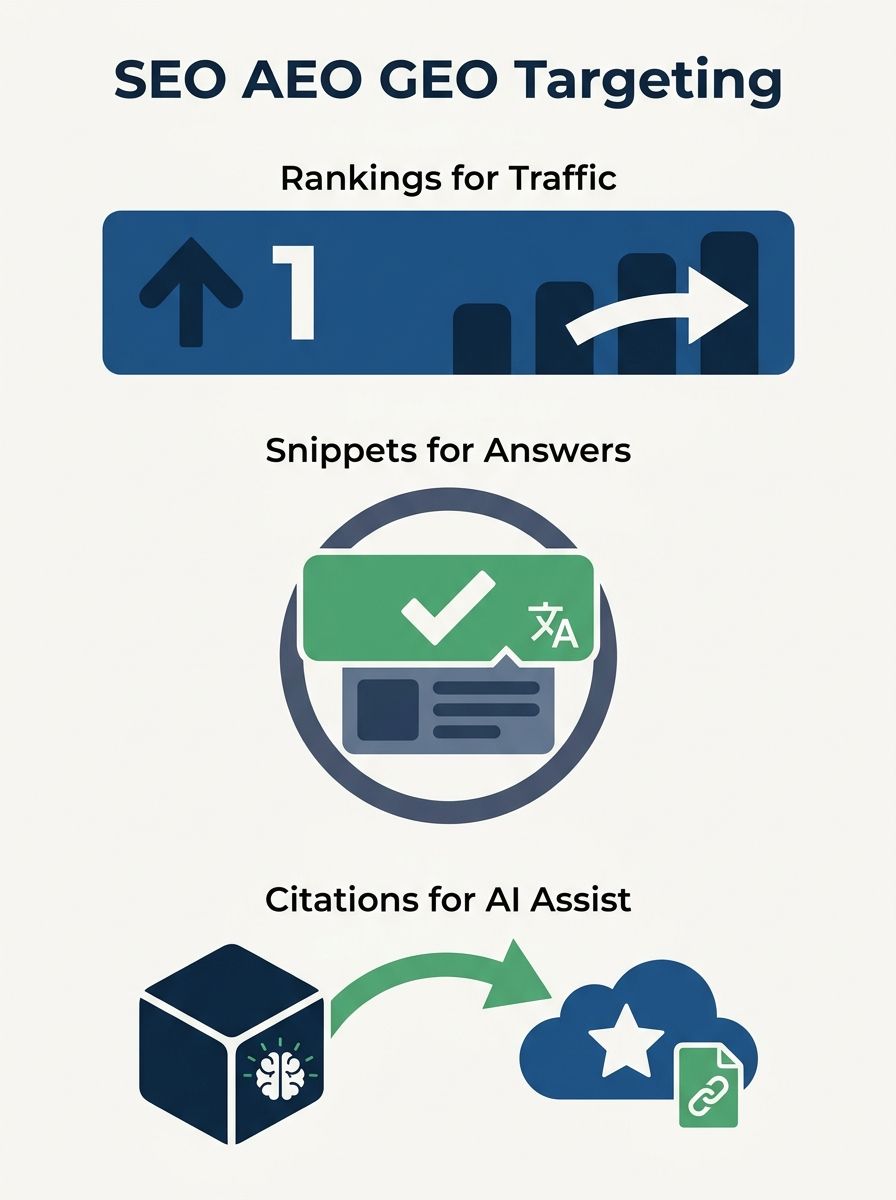
Generative Engine Optimization measures success through AI mentions and citations rather than clicks, according to Smirnov's framework. Content emphasizes fact-density with attributed data points and expert quotes that AI systems can verify and cite. A sample optimization shows "According to a 2025 study by TravelData, booking 21 days in advance reduces costs by an average of 18.4%" replacing generic advice to "book early."
Unit of Value Shifts From Click to Citation
The framework identifies the "unit of value" shift as the core distinction between traditional and generative search optimization. "In traditional search, the unit of value is the Click," the guide states. "In AI search, the unit of value is the Citation."
Content optimized solely for traditional SEO becomes training data that AI systems use without attribution, according to the framework. GEO requires brands to link their names inextricably to factual claims through structured data and clear sourcing that AI parsing can identify and credit.
The taxonomy builds on earlier frameworks distinguishing AI search optimization from traditional approaches, adding AEO as a middle layer between ranking-focused SEO and citation-focused GEO. Voice search and featured snippet optimization occupy the AEO category, while optimization for ChatGPT, Google Gemini, and similar tools falls under GEO.
Content Execution Varies Across Frameworks
The guide demonstrates differences through a single topic—saving money on flights—optimized three ways. The SEO version runs as a comprehensive 2,000-word guide titled "15 Proven Tips to Save Money on Flights in 2026" with internal linking and engagement-focused formatting.
The AEO version strips to a snippet-ready block: "You can save money on flights by booking 21 days in advance, using incognito mode, and flying on Tuesdays or Wednesdays," positioned under an H2 question heading designed for voice assistants and featured snippet extraction.
The GEO version adds attributed data and expert quotes: "According to a 2025 study by TravelData, booking 21 days in advance reduces costs by an average of 18.4%," formatted for AI verification and citation.
Services Implications
Agencies evaluating their 2026 optimization offerings should audit whether current deliverables address all three frameworks or conflate them into a single "SEO" service package. Clients asking generalized questions about "SEO performance" may need education on which metrics matter for their actual visibility goals—rankings, snippet capture rates, or AI citation frequency.
The framework suggests service packages might separate traditional ranking work from snippet optimization and AI citation strategy, each requiring different content structures, technical implementations, and performance dashboards. Manufacturing firms optimizing for both Google and generative engines represent one vertical where the three-discipline approach applies clearly, but the taxonomy extends to any sector where AI-driven search captures query volume.
Teams currently tracking only traditional ranking metrics may miss visibility gains or losses occurring in featured snippets or AI citations. The "geo vs seo vs aeo" distinction forces specificity in both strategy development and performance reporting—what optimization target does each deliverable address, and which success metric proves it worked.
Marcus Webb
Digital marketing consultant and agency review specialist. With 12 years in the SEO industry, Marcus has worked with agencies of all sizes and brings an insider perspective to agency evaluations and selection strategies.
Explore more topics