
Google's March 2026 Core Update: What Changed and How to Audit Your Site's Performance
One of our client sites dropped 34% in organic traffic on March 14th. By March 29th, it had recovered all but 6% of that traffic without us changing a single page. Another client's site, one we hadn't touched in months, quietly gained 22% visibility over the same period.
 Marcus Webb··8 min read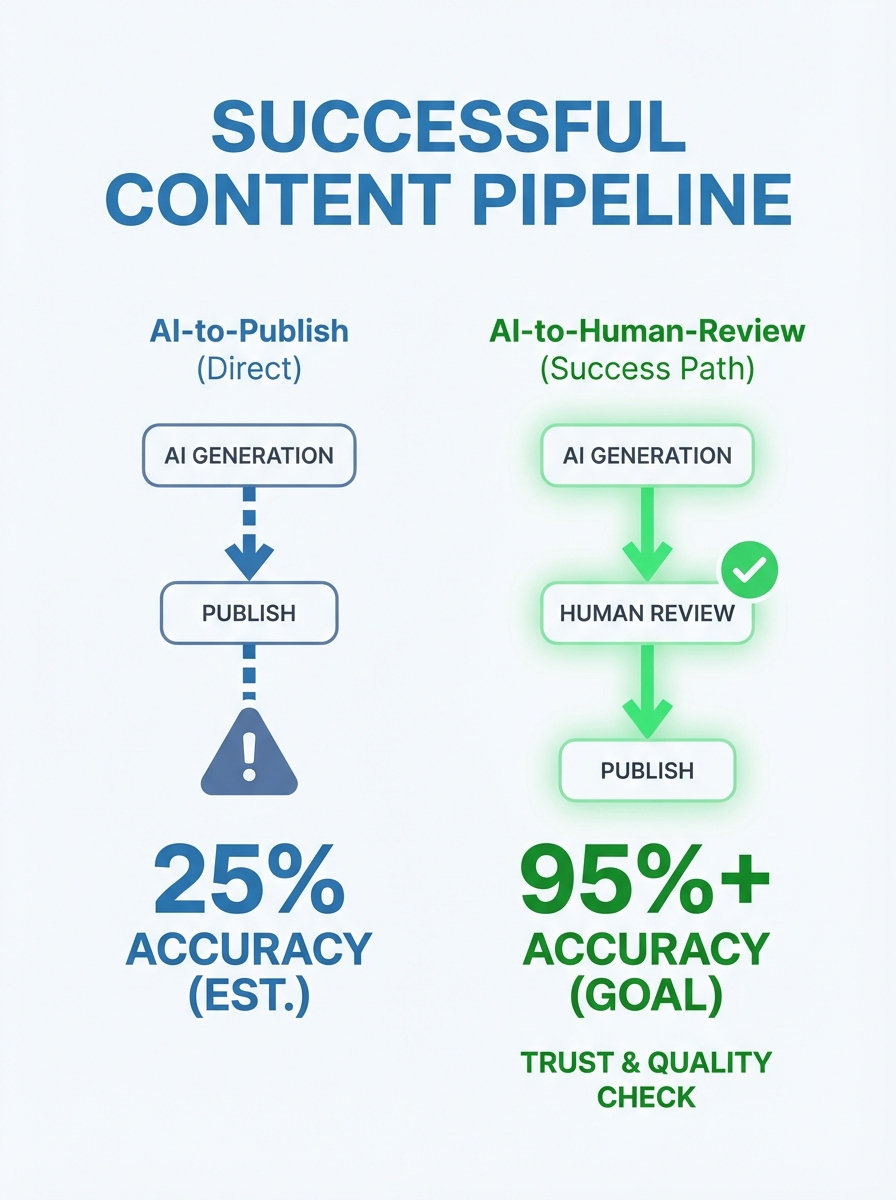
Google's March 2026 Core Update: What Changed and How to Audit Your Site's Performance
One of our client sites dropped 34% in organic traffic on March 14th. By March 29th, it had recovered all but 6% of that traffic without us changing a single page. Another client's site, one we hadn't touched in months, quietly gained 22% visibility over the same period. The difference between the two tells you almost everything you need to know about what Google's March 2026 core update actually rewards.
The update rolled out between March 10 and March 27, and as of today, the dust has mostly settled. I've now had time to analyze performance across a dozen sites I manage directly and compare notes with other practitioners. What follows isn't speculation or regurgitated Google PR speak. It's what I actually observed, what the data shows, and the exact audit process I'm running on every site I touch right now.
What Actually Changed This Time
Every core update comes with a wave of panic. This one was no different. But after watching SEO ranking changes stabilize across multiple properties, a few clear patterns emerged.
The Gemini 4.0 Semantic Filter Is Real
The biggest shift is how Google now evaluates content produced at scale. The March 2026 core update did not ban AI-generated content. Let me say that again for the people in the back: AI content is not penalized by default. What Google deployed is what analysts believe to be a Gemini 4.0 Semantic Filter, which identifies content produced at scale without meaningful human editorial oversight.
The distinction matters enormously. I have sites running AI-assisted workflows where every piece goes through a subject matter expert for review, fact-checking, and the addition of original perspective. Those sites performed fine. In some cases, they gained ground.
The sites getting hammered? They're the content mills publishing 50 articles a week with no editorial layer. Google isn't detecting AI with some magic fingerprint scanner. It's detecting the lack of human value on top of whatever tool created the first draft.
Core Web Vitals Now Carry More Weight
While Core Web Vitals aren't a new factor, their cumulative effect within core updates is becoming more apparent. Pages that load quickly, respond to user input immediately, and maintain visual stability are performing measurably better across this update.
The new wrinkle: Google appears to be evaluating CWV site-wide rather than page by page. That means a handful of bloated, slow-loading pages can drag down your entire domain's performance. One site I audited had excellent scores on its top 20 pages but terrible LCP on about 200 old blog posts loaded with unoptimized images. Those 200 pages were quietly hurting everything else.
Sites with Largest Contentful Paint above 3 seconds experienced significantly more traffic loss than their faster competitors. If your TTFB is over 600 milliseconds, you're playing at a disadvantage.
E-E-A-T Enforcement Has Gone Universal
Experience, Expertise, Authoritativeness, and Trustworthiness used to matter most for health, finance, and legal content. Not anymore. I'm seeing E-E-A-T signals influence rankings across every niche I track, from B2B SaaS to home improvement to food blogs.
The practical manifestation: pages with detailed author bios tied to verifiable credentials are outranking pages attributed to "Staff Writer" or "Admin." Around 72% of top-ranking pages in competitive queries now feature specific author information. That number was closer to 58% before this update.
Google's enhanced author entity recognition is cross-referencing credentials across the web. If you claim to be a certified financial planner on your blog, Google is checking whether that claim holds up elsewhere online.
Information Gain Is Being Actively Enforced
This one caught a lot of people off guard. Information Gain, which measures how much new value a page adds compared to what already exists in the top results, appears to be a direct ranking signal now. Pages that merely rephrase what's already ranking are losing visibility. Pages with original research, proprietary data, or genuine first-hand experience are climbing.
Think about what this means for your content strategy adjustment. If your process is "look at what ranks, write something similar but longer," that playbook is dead. You need to add something the existing results don't have. A unique dataset. A case study. An opinion backed by evidence. Something.
The Search Visibility Audit I'm Running Right Now
Alright, let's get practical. Here's the exact process I follow after a core update to assess damage, identify opportunities, and prioritize fixes. I'm treating this as a search visibility audit template you can copy.
Step 1: Don't Panic for Two Weeks
This is the hardest step. Google's own guidance and industry analysis confirm that rankings fluctuate for up to two weeks during a rollout. Early drops are often temporary. I've seen sites swing wildly during the first ten days, then settle back close to their pre-update position.
If you make sweeping changes during the rollout, you won't be able to tell whether your traffic moved because of the update or because of your changes. Wait until the rollout is confirmed complete, then compare your post-update baseline to your pre-update numbers.
Step 2: Identify What Actually Moved
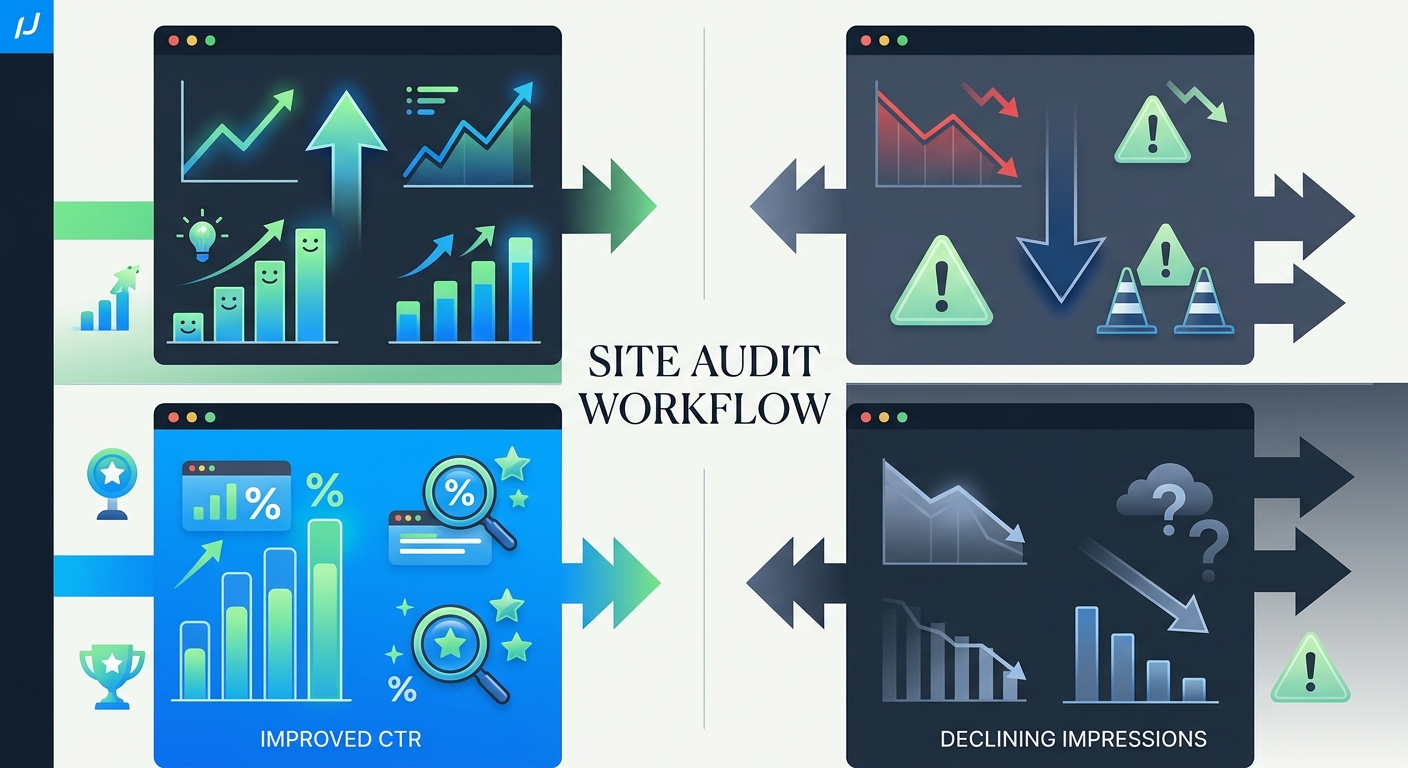
Open Search Console and compare the period from March 28 through April 7 against the two weeks before March 10. Look at three things:
Which pages lost the most clicks and impressions
Which queries dropped in average position
Whether any pages gained visibility you didn't expect
Sort by the biggest losers first. You're looking for patterns, not individual pages. Are the losing pages all in one content category? Do they share a common template? Were they published by the same author? Are they older pieces that haven't been updated?
Step 3: Audit Technical Performance Site-Wide
Run every page through PageSpeed Insights. Yes, every page. I know it's tedious for large sites, but the site-wide CWV evaluation means you can't just optimize your top performers and call it a day.
Focus on three metrics:
Largest Contentful Paint: Get this under 2.5 seconds. Under 2 seconds is better.
Cumulative Layout Shift: Keep it below 0.1. Ads and lazy-loaded images are the usual culprits.
Time to First Byte: Under 600 milliseconds. If you're failing here, look at your hosting, your CDN configuration, or your server-side rendering pipeline.
Google's own SEO fundamentals documentation emphasizes that good technical foundations are prerequisites, not bonuses. The March 2026 update just raised the stakes.
Step 4: Content Quality Triage
This is where most of your recovery effort should go. For every page that lost visibility, ask five questions:
Does this page contain information that isn't available in the current top 3 results?
Is the author identified with real, verifiable credentials?
When was this page last substantially updated?
Does the page answer the search query directly within the first two paragraphs?
Would I trust this page if I found it as a stranger?
Be honest with yourself. I've had to admit that pages I wrote and was proud of simply didn't add enough unique value. The update is indifferent to your feelings.
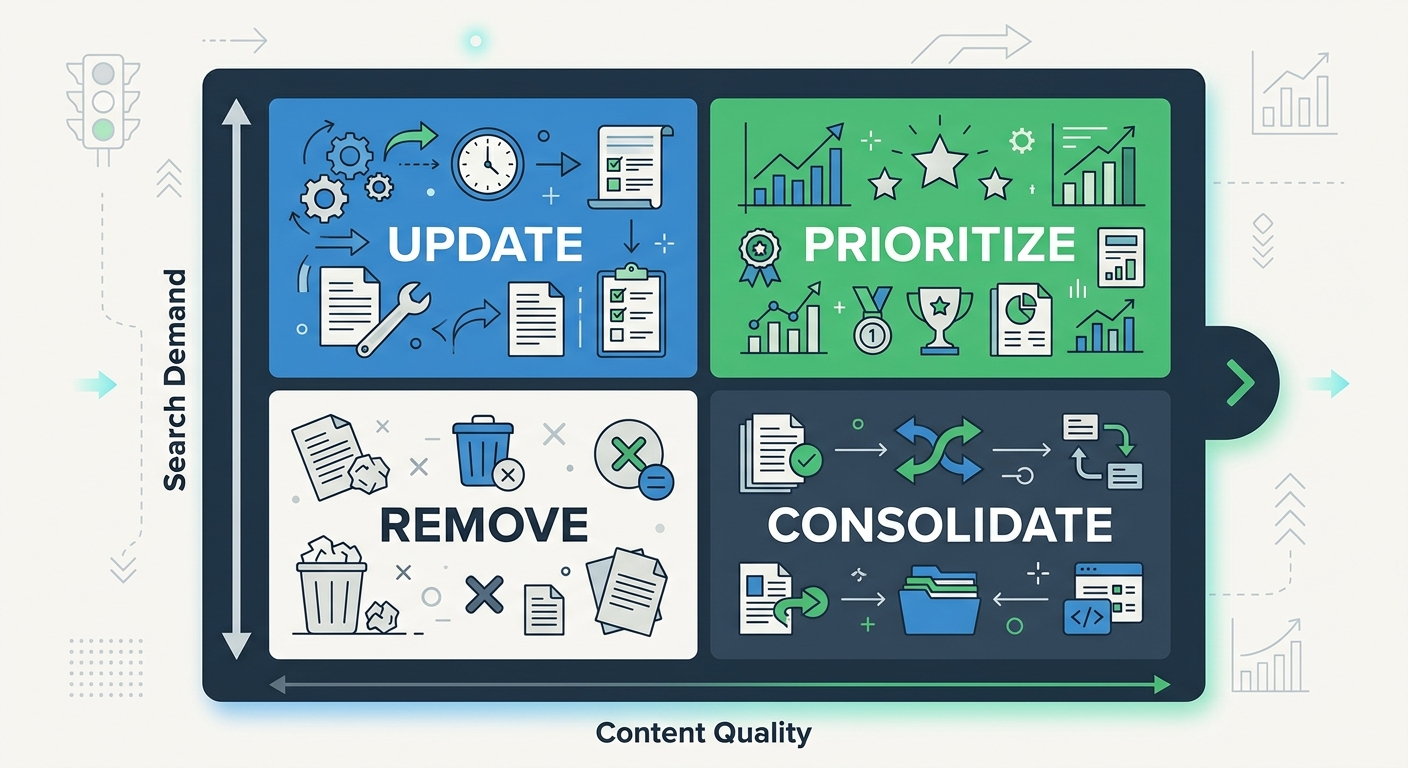
Sites that regularly audit and prune low-quality pages, or improve them with current and valuable information, tend to recover faster across core updates. If a page can't be improved meaningfully, consolidate it into a better page or remove it entirely.
Step 5: Clean Up Your Technical Debt
Beyond page speed, you need to address the boring infrastructure stuff that quietly eats your crawl budget. Fix broken internal links, blocked resources, and redirect chains. Keep your XML sitemap clean and only include URLs you actually want indexed. Every URL in your sitemap that returns a 404, a redirect, or a noindex tag is wasting Google's attention on pages that don't matter.
I found 47 redirect chains on one client's site during this audit. Some were four hops deep. Cleaning those up alone improved crawl efficiency noticeably within a week.
Step 6: Optimize for AI Overviews
This isn't directly part of the core update, but it's impossible to ignore. AI Overviews now appear in a growing percentage of search queries, and the March update seems to have expanded which queries trigger them.
Structure your content with clear headings, direct answers to specific questions, and cited sources. Implement schema markup for your key page types. Sites with strong structured data are significantly more likely to be cited in AI Overviews, which drives a new type of visibility that traditional rank tracking doesn't capture.
Check Search Console for the AI Mode filter if it's available in your account. Track that traffic separately from traditional organic clicks.
What Not to Do
I've already seen people making mistakes in response to this update. Here are the biggest ones.
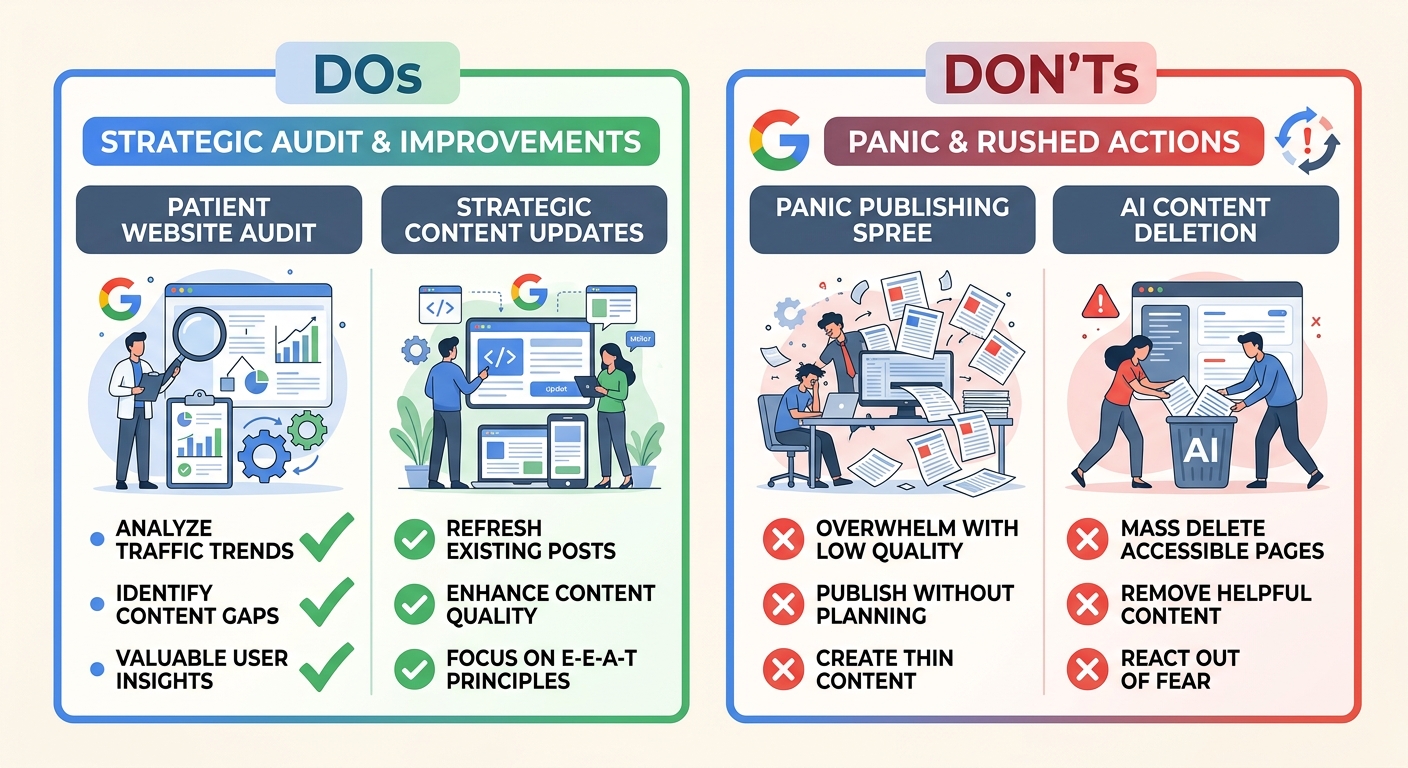
Don't strip all AI involvement from your workflow. The update doesn't penalize AI usage. It penalizes low-effort content regardless of how it was made. A human writing mediocre content gets filtered just as easily as a bot doing the same.
Don't publish a flood of "fresh" content to compensate. Publishing volume without quality improvement is exactly the pattern the Gemini 4.0 filter targets. Ten great pages will outperform a hundred average ones.
Don't ignore pages that gained traffic. Your winners tell you what Google is rewarding. Study them. What do they have in common? Replicate those patterns across your weaker content.
Don't chase every ranking change. Some fluctuation is normal and permanent. Not every page deserves to rank where it was. Be strategic about where you invest your effort based on business value, not nostalgia for a position you used to hold.
The Bigger Pattern Worth Seeing
Step back from the tactical details for a moment. The Google core update 2026 cycle is confirming a direction that's been building for three years: Google is shifting from evaluating pages to evaluating sources. Who wrote this? What makes them qualified? Does this source consistently produce valuable content on this topic? Is the technical infrastructure of this site good enough to deliver that content reliably?
Your site isn't a collection of individual pages competing for individual keywords anymore. It's a source that Google evaluates as a whole. Your worst pages pull down your best ones. Your strongest content lifts everything around it. The author behind a piece matters as much as the words on the page.
That's the real content strategy adjustment this update demands. Stop thinking about pages. Start thinking about your site as a publication with a reputation, because that's exactly how Google is treating it.
What These Patterns Mean for Your Recovery
If you take nothing else from this post, run through these actions over the next two weeks:
Compare your Search Console data from March 28 onward against your pre-March 10 baseline
Identify the pattern behind your biggest losers, not just individual pages
Run a full site CWV audit and fix pages with LCP above 2.5 seconds or TTFB above 600ms
Add real author bios with verifiable credentials to every piece of content
For each underperforming page, identify what unique value it adds beyond what already ranks
Clean your sitemap, fix redirect chains, and eliminate broken internal links
Track AI Overview citations separately in Search Console
Recovery from a core update typically takes two to six months after meaningful changes are implemented. The sites that come back strongest aren't the ones that react fastest. They're the ones that diagnose accurately and fix the right things.
Marcus Webb
Digital marketing consultant and agency review specialist. With 12 years in the SEO industry, Marcus has worked with agencies of all sizes and brings an insider perspective to agency evaluations and selection strategies.
Frequently Asked Questions
- What does Google's March 2026 core update penalize about AI-generated content?
- Google doesn't penalize AI-generated content by default. Instead, it targets content produced at scale without meaningful human editorial oversight. The update identifies content mills publishing 50+ articles weekly with no human review, while AI-assisted workflows with subject matter expert review, fact-checking, and original perspective performed fine or gained ground.
- What Core Web Vitals metrics matter most for the March 2026 update?
- Sites with Largest Contentful Paint above 3 seconds experienced significantly more traffic loss, and Google now evaluates Core Web Vitals site-wide rather than page-by-page. Target Largest Contentful Paint under 2.5 seconds, Cumulative Layout Shift below 0.1, and Time to First Byte under 600 milliseconds to avoid ranking disadvantages.
- How has E-E-A-T changed in Google's March 2026 core update?
- E-E-A-T enforcement went universal across all niches, not just health, finance, and legal content. Around 72% of top-ranking pages now feature specific author information with verifiable credentials, and Google's enhanced author entity recognition cross-references credentials across the web to verify claims.
- What is Information Gain and how does it affect rankings?
- Information Gain measures how much new value a page adds compared to existing top results. Pages that merely rephrase what's already ranking are losing visibility, while pages with original research, proprietary data, case studies, or genuine first-hand experience are climbing in rankings.
- How long should I wait before making changes after a core update?
- Wait at least two weeks after a core update starts rolling out before making sweeping changes. Rankings fluctuate for up to two weeks during rollout, and making changes during this period prevents you from accurately determining whether traffic moved due to the update or your modifications.
- What should I do with pages that gained traffic after the March 2026 update?
- Study the pages that gained traffic to identify what Google is rewarding. Analyze their common patterns—such as author credentials, content structure, originality, and technical performance—and replicate those patterns across your weaker-performing content.
- How long does recovery from a core update typically take?
- Recovery from a core update typically takes two to six months after meaningful changes are implemented. Sites that recover strongest are those that diagnose accurately and fix the right things, not those that react fastest.
- Should I publish more content to recover from traffic losses in a core update?
- No. Publishing a flood of fresh content without quality improvement is exactly the pattern the Gemini 4.0 filter targets. Ten great pages will outperform a hundred average ones, and volume without quality is counterproductive.
Explore more topics